


There’s a moment, usually alone, usually unremarkable, when you catch your reflection and realize your hair is telling the truth before you’re ready to hear it.
Not the Instagram truth. The lived one.
Hair remembers seasons we forget. Stress we normalized. Survival choices we justified. It remembers who we were when we were rushing, conforming, and coping. And it remembers when care became optional instead of sacred.
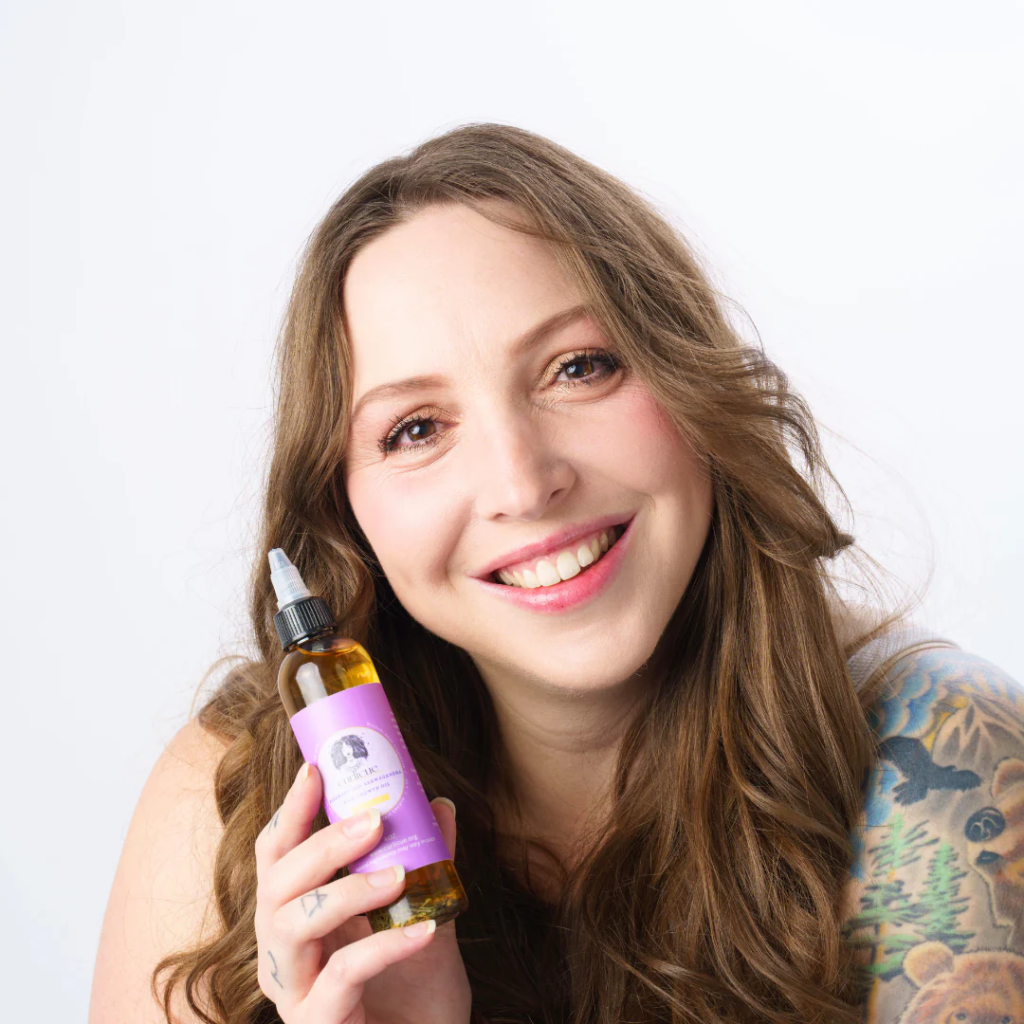
Curlicue.us exists because of that reckoning.
Not the glossy brand-origin kind. The quieter one. The kind that happens in a kitchen with jars, oils, herbs, and a woman who just wants her hair, and herself, back.
Before “Clean Beauty” Had a Hashtag
Long before Curlicue was a brand, it was curiosity.
It was a child in her mother’s kitchen, mixing oils and herbs with the seriousness of a scientist and the faith of someone who believed plants could help. Fenugreek seeds crushed between fingers. Hibiscus petals steeped until the water blushed. Oils warmed gently, releasing scents that felt ancient and reassuring.
This wasn’t about trends. It was about understanding.
What strengthens? What softens? What restores when something has been stripped away?
Those early experiments planted a seed that would go dormant, but never disappear.
When Structure Replaces Care
Then came the military.
Discipline. Structure. Rules that don’t leave room for intuition, or coils.
Strict grooming standards and punishing schedules made care feel like an inconvenience. Relaxers became a tool of compliance. They made hair “manageable” in an environment that demanded uniformity. But hair doesn’t forget chemistry. It records it.
Over time, the damage showed up quietly. Thinning edges. Breakage. A slow erosion of density and confidence.
Hair wasn’t just hair anymore. It was identity under pressure.
Motherhood, Shedding, and the Radical Reset
Postpartum hair loss doesn’t ask permission. It arrives like grief you didn’t schedule.
After childbirth, when everything else is already tender and new, watching your hair thin can feel like losing the last familiar thing you recognize. Add that to years of chemical stress, and suddenly the mirror feels like a confrontation.
So, she did the bravest thing. She cut it all off.
Not as punishment. As permission.
A clean slate, for hair, yes, but also for mindset. A decision to stop fighting biology and start listening to it.
And once again, the kitchen became the lab.
Returning to the Plants That Never Left
This time, the research went deeper.
Not just what works, but why. How herbs stimulate circulation. How oils support the scalp barrier. How moisture, not manipulation, is the real foundation of growth.
Fenugreek, rich in proteins and nicotinic acid, known to support shedding cycles and scalp health.
Ashwagandha—an adaptogen that addresses stress at the root (including stress that shows up on the scalp).
Hibiscus, packed with amino acids, revered for strength, elasticity, and shine.
These weren’t ingredients chosen for marketing poetry. They were chosen because hair responded.
Slowly. Honestly. Without drama.
Her hair grew back thicker. Healthier. Stronger. And crucially, it stayed.
When “Would I Use This on My Kids?” Becomes the Only Filter
Motherhood sharpened the mission.
Because once you’re choosing products for children, the margin for “maybe fine” disappears. Labels matter. Sourcing matters. Gentleness matters.
Curlicue.us was born from that standard.
Not perfection, intention.
Plant-based formulations designed for real routines, real families, real hair textures. Products that respect the biology of hair instead of trying to dominate it.
The Herbal Hair Growth Oil: A Scalp Ritual, Not a Miracle Claim
Let’s be clear: real growth doesn’t come from hype.
It comes from circulation. Consistency. Reduced inflammation. Moisture retention. Time.
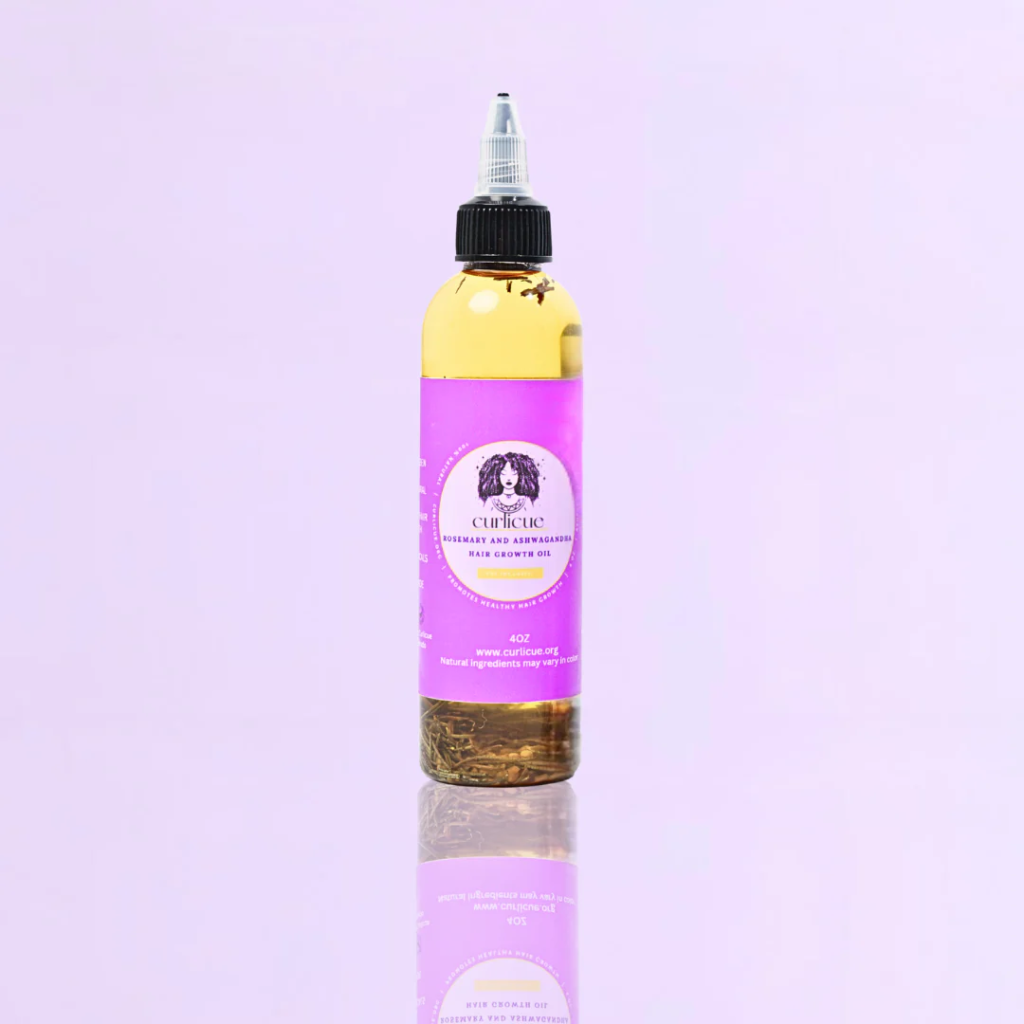
The Herbal Hair Growth Oil is designed to support exactly that.
This is not a slap-it-on-and-hope oil. It’s a ritual oil.
Fenugreek to nourish follicles and support density.
Ashwagandha to calm the scalp’s stress response.
A blend that feeds, not suffocates, the scalp.
Used with intention (massaged slowly, regularly), it encourages the conditions hair needs to grow. No shock. No aggression. Just steady support.
It’s the kind of oil that reminds you to touch your scalp gently. To check in. To slow down.
Which, frankly, is where most hair journeys go wrong.
The Hibiscus Hair Butter: Moisture as a Growth Strategy
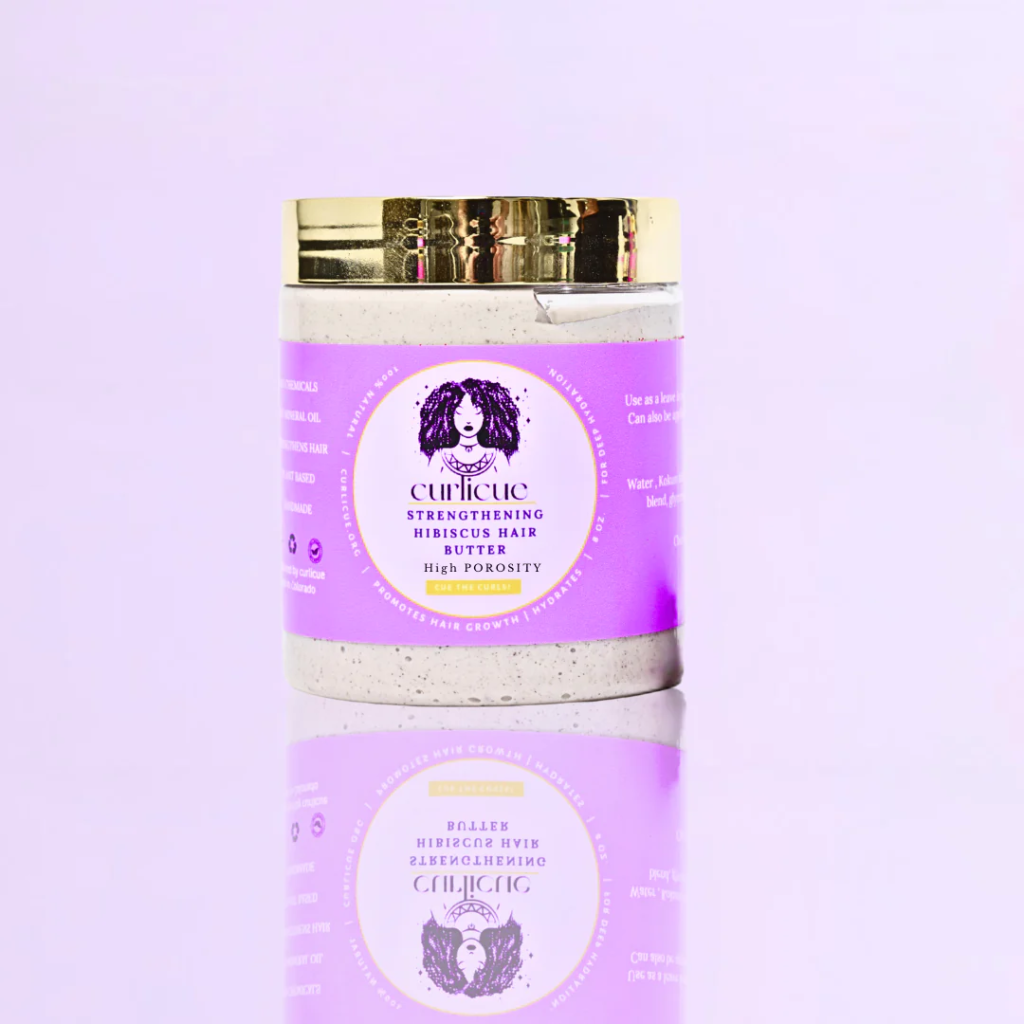
If growth oil is about the scalp, Hibiscus Hair Butter is about preservation.
Because growth doesn’t matter if length can’t be retained.
High-porosity hair, especially curls and coils, loses moisture quickly. That dryness leads to breakage, which gets mislabeled as “hair not growing.”
Hibiscus changes that conversation.
Rich, strengthening, deeply conditioning, this butter seals moisture into strands that are tired of leaking it. It supports elasticity, reduces snap, and gives hair the kind of softness that doesn’t disappear by noon.
This isn’t a styling afterthought. It’s structural support.
Hair feels stronger because it is stronger.
Why Going Back to Basics Is the Most Radical Move
Curlicue’s philosophy isn’t about rejecting modern life. It’s about correcting its excesses.
Too many products. Too many steps. Too much force.
Plants work slowly. But they work with the body, not against it.
This is hair care that honors cycles. That understands shedding isn’t failure. That believes consistency beats intensity every time.
And maybe that’s the real lesson here.
That restoration, whether hair, health, or self, rarely comes from pushing harder. It comes from returning.
To what worked before we were told it wasn’t enough.

Hair as an Heirloom, Not a Problem to Fix
Curlicue.us isn’t selling transformation. It’s offering continuity.
A way to care for hair without fear. A way to teach children that their texture is not an obstacle, but an inheritance. A way to build routines that feel grounding instead of exhausting.
These products are pieces of a lived story, one shaped by resilience, reset, and choosing plants over panic.
They’re reminders that growth doesn’t need to be rushed to be real.
Sometimes, the most powerful thing you can do, for your hair, for yourself, is go back to where you started.
Back to the kitchen.
Back to the herbs.
Back to listening.
And let the rest grow from there.