


There is a particular kind of quiet that arrives after you’ve done the hard thing.
- After the detox.
- After the elimination phase.
- After the week of bone broth, herbal teas, and that slightly feral look in your eyes that says, I am healing, do not approach.
It’s not dramatic. It doesn’t announce itself on Instagram. No one congratulates you for it. But it’s the most important phase of all. Because the reset was never the point. The point was what comes next.

The Aftermath No One Talks About
We live in a wellness culture obsessed with before-and-after photos, but strangely uninterested in the middle, the maintenance, the consistency, the unsexy daily rhythm that actually determines whether change sticks.
Resets are seductive because they promise a clean slate. A grand gesture. A decisive break with the past. And yes, when done gently and intelligently, they can be incredibly useful, clearing inflammation, reducing digestive distress, and quieting symptoms like bloating, reflux, or that vague “why do I feel off?” feeling that has become the background noise of modern life.
But here’s the truth no cleanse will tell you:
Your gut doesn’t want drama. It wants devotion.
The microbiome, that vast internal ecosystem influencing digestion, immunity, mood, metabolism, and even how resilient you feel to stress, thrives on repetition, predictability, and daily care. Not extremes. Not punishment. Not reinvention every Monday morning.
Which brings us to the real work. The part after the reset. The part where wellness stops being an event and becomes infrastructure.
From Reset to Rhythm
Think of a reset as clearing a field. You remove the debris. You aerate the soil. You make space.
But nothing grows unless you plant something and keep tending it.
This is where most people falter, mistaking the absence of symptoms for the presence of health. The bloating subsides, the reflux calms down, digestion feels smoother… and suddenly the ritual disappears. The attention drifts. Old habits creep back in under the guise of “balance.”
And slowly, quietly, the noise returns.
What actually sustains gut health is not intensity, but anchoring, a small, repeatable action that signals safety and consistency to your system. Something so easy it feels almost too simple to matter. Something you do not have to psych yourself up for.
Enter the daily synbiotic ritual.
(And yes, synbiotic, not symbiotic. Autocorrect does not get a vote here.)
Why Synbiotics Change the Conversation
Let’s clarify something that still gets muddled in wellness circles: probiotics alone are not the whole story. Neither are prebiotics on their own. A synbiotic is the deliberate pairing of both beneficial bacteria and the fuel that helps them thrive.
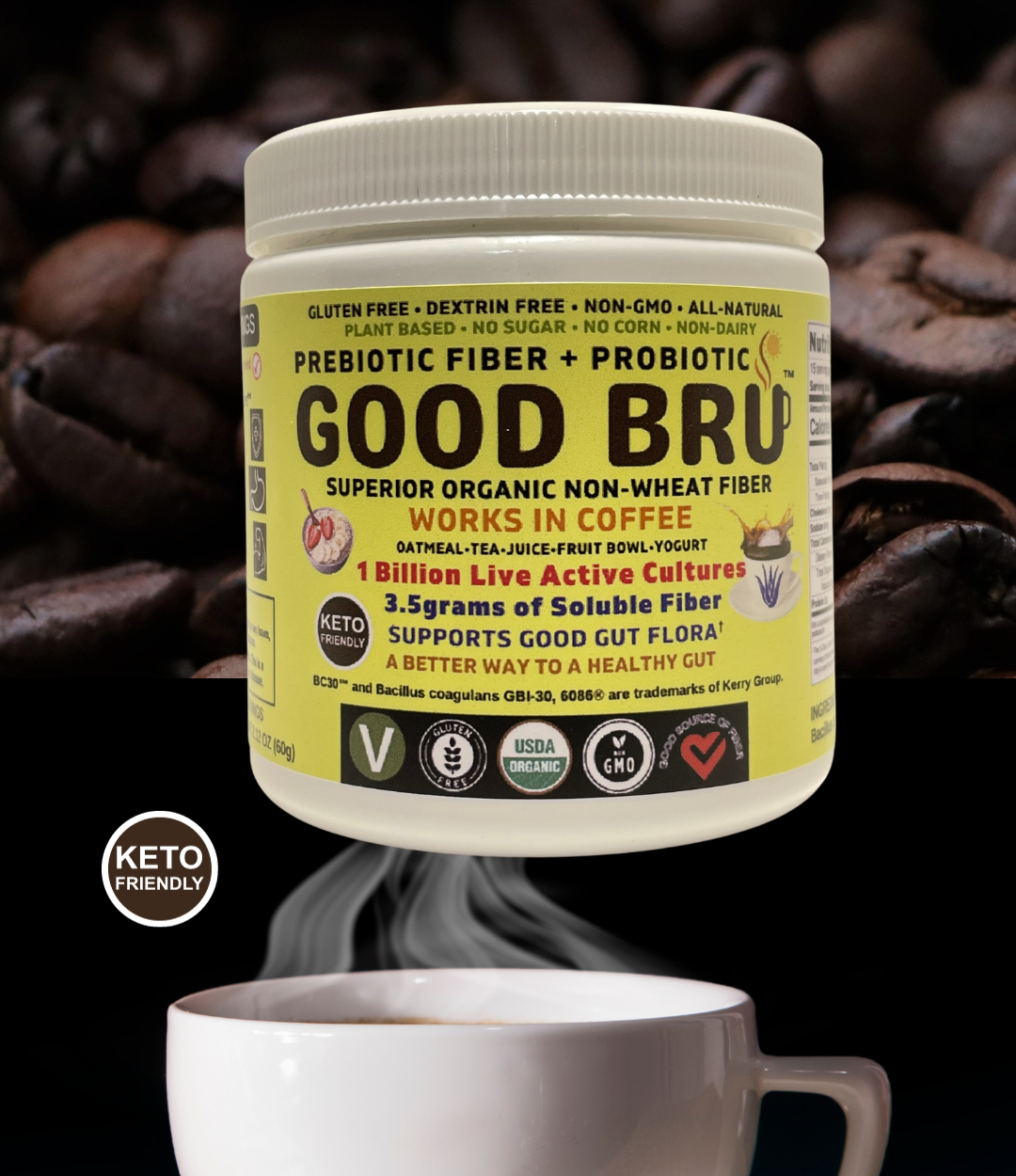
Good Bru’s Organic Prebiotic Fiber + Probiotic formula brings together Bacillus coagulans GBI-30, a resilient, clinically studied probiotic strain that survives stomach acid, with organic blue agave inulin, a prebiotic fiber that nourishes beneficial microbes once they arrive.
Translation?
You’re not just introducing guests to the party. You’re making sure they’re fed.
This matters because the gut isn’t static. It’s responsive. It changes based on what you consistently give it, not what you do once when things feel dire.
Product Image

Gut-First Doesn’t Mean Gut-Obsessed
There’s a difference between being attentive and being controlling.
A gut-first lifestyle isn’t about tracking every sensation or micromanaging every bite. It’s about recognizing that the gut is foundational, the place where energy, immunity, comfort, and resilience quietly originate, and supporting it before problems escalate.
In real life, this looks refreshingly unclinical.
- No timers.
- No powders that taste like regret.
- No sense that you’re “doing something medical” before 9 a.m.
Instead, it’s a single scoop of Good Bru stirred into something you’re already drinking, coffee, tea, a protein shake, even just warm water, becoming part of an existing habit rather than a new rule you have to remember.
This matters more than it sounds.
Behavioral science consistently shows that habits stick when they are stacked onto routines that already exist. When friction is removed, compliance becomes almost automatic. And when gut support becomes automatic, the benefits compound quietly in the background.
The Power of the Boring Middle
Wellness culture loves breakthroughs. But biology loves boredom.
Your microbiome improves not because you shocked it into submission, but because you fed it consistently over time. The benefits show up gradually: better digestion, less bloating, more regularity, fewer flare-ups of reflux or discomfort, not overnight, but week by week.
This is especially relevant for people coming off gut resets designed to calm issues like GERD, acid reflux, or IBS-adjacent symptoms. The relief achieved during a reset is fragile if it’s not followed by ongoing support. Stomach acid levels, gut motility, and microbial balance and these systems recalibrate slowly. Abruptly withdrawing support is like rehabbing an ankle and then running a marathon in flip-flops.
A daily synbiotic acts as a buffer, not forcing change, but reinforcing stability.
Energy Is a Gut Story (Even When We Pretend It’s Not)
We often talk about energy as though it’s a motivational issue. As if the right playlist, the right planner, or the right manifestation practice will suddenly make us feel more alive. But fatigue is frequently a digestive story in disguise.
When nutrients aren’t absorbed efficiently, when protein utilization is suboptimal, when inflammation interferes with metabolism, the body simply has less to work with. Research on Bacillus coagulans GBI-30 shows improved protein absorption by up to 20%, which quietly shifts how the body fuels itself over time.
This isn’t the jittery energy of stimulants. It’s the steady, unremarkable feeling of having enough. Enough stamina. Enough clarity. Enough capacity to get through the day without feeling like everything requires effort.
For the GLP-1 Generation (and Everyone Else)
There’s also a growing group of people navigating digestive side effects from GLP-1 medications, nausea, slowed digestion, bloating, and discomfort that can make already-challenging lifestyle changes feel harder.
What’s interesting here isn’t just symptom relief (though that matters), but the role of gut support in quality of life. Studies involving the same probiotic strain used in Good Bru show improvements in digestive comfort for individuals on these medications, suggesting that synbiotic support may help the gut adapt more gracefully.
Again, this is not about intervention. It’s about accompaniment. Supporting the body while it does what it’s already trying to do.
The Ripple Effects No One Sells You On
Once digestion stabilizes, other things quietly follow.
- Immune resilience improves because a significant portion of immune activity originates in the gut.
- Oral health shifts, because microbial balance doesn’t stop at the stomach.
- Mood steadies, because the gut-brain axis is not a metaphor; it’s a biochemical conversation.
These aren’t headline-grabbing promises. They’re background upgrades. The kind that don’t announce themselves, but make everything else feel slightly easier.
And perhaps most importantly, they change how you relate to your body.
When your gut is supported daily, you stop treating your body like a problem to solve and start treating it like a system to care for. There’s less urgency, less self-correction, and less swinging between extremes.
There is rhythm.
Ritual Over Resolution
Resolutions are loud. Rituals are loyal.
A resolution demands willpower. A ritual earns trust.
Good Bru works not because it promises transformation in seven days, but because it invites consistency without drama. Its clean, organic formulation, free from artificial additives, compatible with keto, plant-based, and gluten-free lifestyles, makes it something you don’t have to negotiate with yourself about.
You don’t need to “get back on track” with it. You just keep going.
And in a world that constantly pushes reinvention, there is something quietly radical about choosing maintenance.

After the Reset Is Where Life Actually Happens
The reset was the inhale. This is the exhale.
The place where health stops being aspirational and becomes operational. Where your gut is no longer something you react to, but something you proactively support. Where daily life, coffee, breakfast, movement, and work become the delivery system for long-term well-being.
A gut-first ritual doesn’t ask you to change who you are. It simply asks you to show up consistently for the system that shows up for you every day.
And that, perhaps, is the most luxurious form of wellness there is.
Not the cleanse. Not the challenge.
But the quiet confidence of knowing your foundation is solid, one daily sip at a time.