

For more than 50 years, children’s bottles have been made largely from plastic. Plastic is lightweight, relatively inexpensive, and convenient. Over the years there have been few questions raised surrounding the use of plastic. It’s only fairly recently that research around microplastics and chemical exposure has grown, and with it, so has a quiet unease among parents. BPA is an abbreviation we have all seen before and it is concerns over the same that sparked the initial awareness amongst parents.
This was the start of a brand that supplies a 100% plastic-free bottle system, Pura Stainless.
When Convenience Comes at a Cost
Plastic didn’t become the baby bottle material of choice overnight, but once it arrived, it stayed. In the mid-20th century, plastic was revered as a modern miracle. It was lightweight, affordable, shatterproof, and easy to mass-produce. For parents, it seemed like a practical upgrade from glass and for manufacturers, it was efficient and scalable. Over time, plastic became the norm in infant and toddler feeding products.
Convenience sometimes comes with it’s own set of questions. There has been research and numerous studies done on microplastic shedding, and serious concerns have come to light surrounding what happens when you shake, scrub, sterilize, and reheat a bottle over and over again for days, weeks, and sometimes even months. Chemical leaching is also a concern. It began with BPA, but the pattern continued with the replacement BPS and other ingredients and compounds like phthalates. Manufacturers countered this with BPA-free products but even that wasn’t reassuring because further research implied that these alternative plastics might carry the same fate and risks. Heat degradation through repeated warming can break down the plastic over time. Many parents were caught between a proverbial rock and a hard place, between convenience and caution.
Another huge factor to take into account, is how much all this plastic bottle production, use and replacement is costing our environment. Bottles for babies are replaced regularly as they grow through the stages and where do the discarded bottles go? Onto the trash heap to add to the throng of plastic waste already present. Any parent wants to make the safest and most sustainable choice for their children, and the anxiety surrounding this particular topic is very real. Many manufacturers did try to counter by removing BPA from their products but very few asked the most relevant question of all, “What if plastic didn’t belong in children’s bottles at all?
Plastic-Free Revolution
From the beginning the brand made their position clear. They believed “safe” should mean truly safe not safer than before, not BPA-free but still plastic, but just safe. The company’s founding mission was built firmly on the ideology that parents shouldn’t have to worry about trying the decipher manufacturing labels or spend sleepless nights worrying about what ingredients or compounds might be tainting their children’s milk or water. If there was uncertainty around plastic, the solution was never to improve it or change the composition, it was to remove it entirely.
They didn’t just remove plastic from the bottle body completely; it removed it from collars, lids, and internal components as well. Their bottles and components are made from food-grade 18/8 stainless steel and medical-grade silicone, both known for durability, stability, and safety under heat.
Today, the brand holds more than 30 patents, is distributed in over 20 countries, and has earned 53 independent awards, but their most profound achievement is the impact made by their products. The brand didn’t just create a new bottle; they challenged an industry and invited parents to rethink what everyday safety can look like.
Kiki 9oz Infant Bottle with Sleeve
The earliest months of a child’s life are filled with repetition for baby and the parents; midnight feedings, careful sterilizing, and warming milk to just the right temperature become like clockwork. During this stage, new parents want simplicity and they want to sure that what they are doing and providing is the best that they can for their baby.
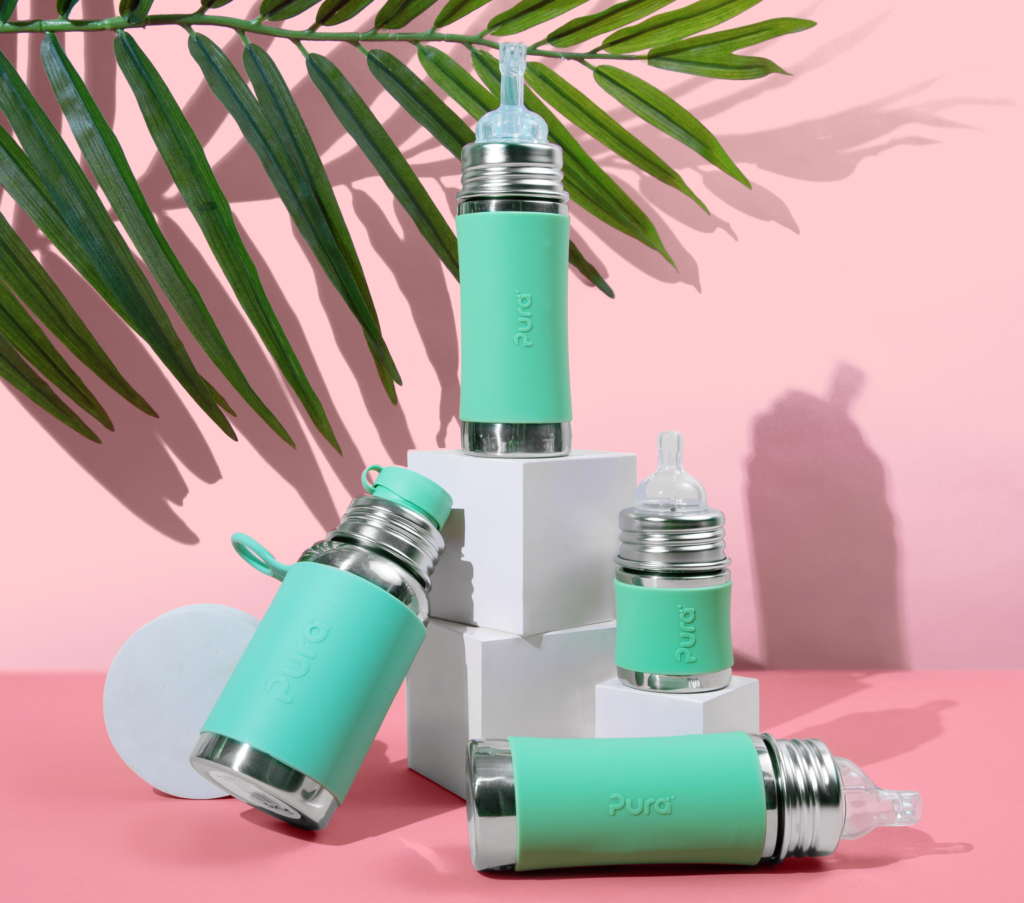
The Pura Kiki 9oz Infant Bottle with Sleeve was designed with that in mind. The ideally sized bottle incorporates an anti-colic vented medical-grade silicone nipple system and a body made only of food-grade 18/8 stainless steel. The components are also made of the same stainless steel.
The soft silicone sleeve is practical; it protects your baby’s hands from, protect the cup from inevitable falls, and makes the bottle easier to grip during those early attempts at self-holding. Stainless steel differs from plastic bottles in that they don’t crack, cloud or degrade over time, and they don’t retain odors or flavors.
Stainless steel removes the uncertainty or fear factor for parents who are worried about microplastics in heated milk. For those parents who are tired of replacing cracked or worn plastic bottles, stainless steel offers longevity measured in years, rather than weeks or months. For families thinking about sustainability, the most compelling feature may be that the bottle isn’t designed for a single phase.
As you baby grows and needs change, the bottle transforms accordingly, it doesn’t get tossed out on the trash heap.
Kiki 11oz Sippy Bottle with Sleeve
As babies grow into toddlers, feeding habits change and it becomes less about dependence and more about discovery where you can expect little hands to be reaching, grabbing, tipping, and testing boundaries.
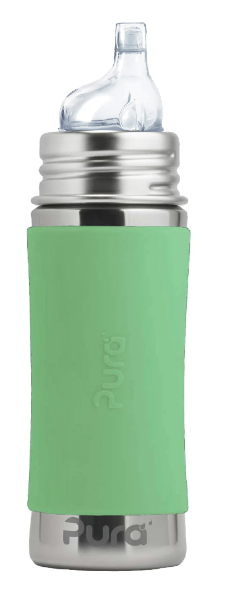
is designed for exactly this stage of growing independence. It has a larger capacity which means it can hold more to meet increasing hydration needs for toddlers on days where they are constantly on the move. This bottle body is also made from food-grade 18/8 stainless steel and medical-grade silicone.
The silicone sippy spout contains no hidden plastic valves or internal components which is what sets it apart from any other on the market.
The protective silicone sleeve still plays an important role, absorbing drops and falls that are inevitable during toddlerhood, and the silicone sleeve makes it easy for your toddler to keep hold of while walking, running and climbing.
The same bottle used during infancy can simply be fitted with a sippy top, eliminating the need to purchase an entirely new cup. One bottle moves through multiple stages instead of being replaced at each milestone.
Less consumption, less plastic waste, and lower long-term costs.
A Family’s Journey from Plastic to Pura
When Emma and Daniel Jacobs welcomed their first child, they felt completely overwhelmed. The shelves at the grocery store were packed to the rafters with everything from bottles promising to reduce the chance of colic, to BPA-free. They decided on a well-known brand that was BPA-free because in their mind that meant it was safe.
As the first few months passed, they began to notice that the bottles grew cloudy despite careful washing, and one even developed faint scratches along the inside. Emma found herself hesitating each time she warmed milk, she had a question nagging at the back of her mind, “What was repeated heating doing to the material that the bottle was made from?”
As new parents wanting the best for their baby, they began to research and that led them to Pura Stainless and its fully plastic-free design. They decided to try the 9oz infant bottle. They noticed the difference straight away, the bottle stayed clear and solid, even after sterilizing, and it didn’t hold onto the odors from previous feeds.
As their baby reached one year old and started to transition to a sippy cup, they realized they didn’t need to buy a whole new set and that by swapping the nipple for a sippy top, the same bottle adapted to the next stage.
Convenience, money saved replacing work parts or bottles, and the confidence in knowing about what touched their child’s milk and water are benefits that are far reaching.

More Than a Bottle
The story of this brand is a story of rethinking what “safe” really means. Each bottle reflects a firm commitment to new parents and their babies and to sustainability, reducing waste and encouraging thoughtful consumption.
The company is looking forward to a future where plastic-free living is the norm, and where the choices you make for your children reflect care for their well-being. It also looks further than you or your children, it focuses on the responsibility we all have for the planet.