


Sleep is something none of us can live without. It was once something that came naturally and without much effort. As life has become more stressful and busier, sleep has become something that eludes many, regardless of age, profession, or lifestyle. Falling asleep is one obstacle; the next is actually staying that way to feel the full restorative benefits. The big question is why so many are struggling to achieve what once came naturally, and, even more worrying, how does it affect your brain’s natural rhythm? I am sure you have all had a few nights when sleep eluded you. Do you remember how you felt the next day? Brain fog, irritability, lack of concentration, and a decline in logical thinking are all telltale signs of insufficient restful sleep.

A Brain Out of Sync
For as long as I can remember, sleep challenges have always been treated as surface-level issues, such as stress, caffeine, screen time, or poor habits. These factors still play a role today, but they often mask a more serious underlying problem: the brain is no longer operating within its natural frequency patterns. The human brain is very active during sleep hours. It produces distinct electromagnetic frequencies that correspond to different stages of rest. From the light drifting of Stage 1 sleep to the restorative depths of Stages 3 and 4, and finally into the vivid, emotionally rich world of REM sleep, each phase follows a precise neurological rhythm.
When the rhythm is disrupted, sleep issues and disorders become prevalent. Disruptions can come in many forms. Some lie awake for hours, struggling to fall asleep; others fall asleep with ease but struggle to stay asleep, repeatedly waking up throughout the night. The resultant exhaustion is the same in both cases. The disturbing thing about sleep disturbances that recur is that the brain learns this pattern and begins to function outside its optimal state, reinforcing the very problem it is trying to overcome.
A History Rooted in Unexpected Discovery
Interestingly, the search for solutions to this problem did not begin with sleep. In 1992, Dr. Fraser W. Lawrie founded a research company to study the effects of pulsing electromagnetic frequencies on neurological conditions. The work was supported to an extent by grants from the National Institutes of Health and the Multiple Sclerosis Association of America. The team explored conditions such as multiple sclerosis, Parkinson’s disease, migraines, depression, and learning disorders. Sleep was not a focal point of the research. It was during the studies that something unexpected became apparent. Many participants in the research studies began reporting improvements in their sleep quality and the occurrence of vivid dreams, which they hadn’t experienced before.
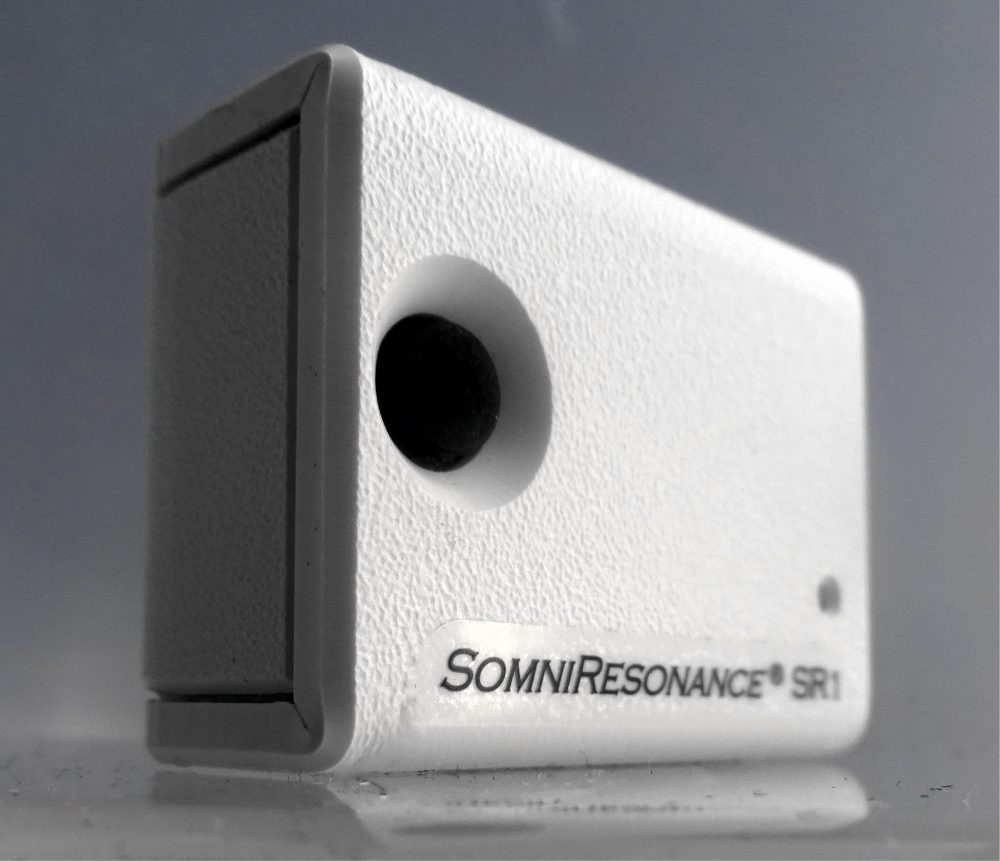
As with any good research study, a new question came to the fore: “If specific electromagnetic frequencies could influence neurological conditions, could they also help restore the brain’s natural sleep patterns?” It is this very question that led to the development of the SomniResonance SR1 Delta Sleeper.
Mimicking Nature, Not Overriding It
The SR1 doesn’t force sleep or sedate the brain. It works by mimicking the natural electromagnetic frequency patterns of a healthy, well-functioning brain during sleep.
If the brain has drifted away from its natural rhythm, it simply has to be reminded of what that rhythm is.
The SR1 generates a low-strength magnetic field of approximately 50 milliGauss, which falls within the natural range of the Earth’s own electromagnetic field. This is a critical distinction. Many technologies in the broader wellness and medical space rely on significantly stronger fields, sometimes exceeding 1 Tesla, or 200,000 times the strength of the SR1, which are not considered natural or low-risk. SR1 on the other hand, operates within a range that aligns with the body’s existing environment, gently guiding back to what was once normal.

Understanding Sleep: Why Balance Matters More Than Depth
Deep sleep does not always equate to restful sleep, although it is an important phase of sleep for physical repair and recovery. It is only a small portion of the overall sleep cycle.
A typical sleep cycle lasts approximately 90 minutes and includes multiple stages:
- Stage 1: Light sleep (about 5%)
- Stage 2: Light but stable sleep (45–55%)
- Stages 3 & 4: Deep sleep (20–25%)
- Stage 5: REM sleep (20–25%)
Each stage plays a unique role. Deep sleep supports physical restoration, but REM sleep is equally critical. It is during REM that the brain processes emotions, consolidates memories, and supports cognitive development. If REM sleep is disrupted, it can lead to emotional instability, moodiness, memory issues, and a sense of mental fatigue or brain fog, even if the tally of hours slept is seemingly more than sufficient.
Many sleep interventions follow the wrong route in their plight to remedy sleep disruptions. The early prototypes of SR1 fell into the same trap. They were designed to extend deep sleep. Participants in the research studies fell asleep easily but still woke up groggy, unfocused, and mentally drained. They often reported not dreaming, a sure sign that REM sleep was never achieved. Sleep is less about maximizing one stage over another than about maintaining a balance among all the stages.
Restoring the Full Cycle
The final design of the SR1 reflects this understanding. It doesn’t keep your brain in one stage for longer than is natural; the device encourages your brain to move through the stages of sleep naturally. It doesn’t aim to control your sleep patterns but rather to help your brain remember what a natural, normal, healthy pattern is.
Many of the remedies or treatments available now aim to control and fix, whether through medication, stimulation, or behavioral restriction. The SR1 is different. It works through reconditioning, assuming that the brain already knows how to sleep, and it simply needs to remember.
When Disruption Is a Sign of Progress
At first, using SR1 may seem to have a less-than-positive effect. Sleep disruptions sometimes get worse before they get any better. Remember, your brain has become accustomed to an irregular pattern. Introducing a different pattern, even though it mimics “normal,” will feel unfamiliar. The disruptions are the result of your brain shifting from the learned “normal” back to the “normal” it already knows but has forgotten. As the brain adapts, sleep often becomes more consistent, deeper, and more restorative. Change does not happen instantly; it requires repetition, consistency, and time, as with any neurological retraining.
Different Kind of Medical Device
In an industry often characterised by complexity and regulation, the SR1 stands out. In 2013, the device received Underwriters Laboratories safety certification, confirming its compliance with rigorous safety standards. Two years later, it was classified as “low risk” by the U.S. Food and Drug Administration and cleared for sale without a prescription.

Returning to What the Brain Already Knows
Sleep is not something the body needs to be taught; it is something it needs to remember.
Modern sleep disorders are not a sign of a lack of ability; it’s a loss of rhythm. Time, stress, and busy lives cause the brain to drift away from its natural patterns, adapting to conditions far from ideal.
The SomniResonance SR1 Delta Sleeper offers a different kind of solution. By gently guiding the brain back to its natural frequency patterns, it addresses the problem at its source rather than its symptoms.
It is not a quick fix or miracle treatment that changes things overnight; it is a measured approach. It reflects a deeper truth: sometimes, the most effective solutions are not those that force change, but those that help the body find its way back to balance.