

People in the wellness world often talk about exercise, mindfulness, or nutrition. But there is another aspect to wellness that touches millions of families: the comfort, dignity, and mental health of people with dementia and the people who care for them.
In the US, some 6.9 million people aged 65 and older have Alzheimer’s disease, which is the most common type of dementia. Alzheimer’s disease is the most common type of dementia, accounting for 60% to 80% of all cases. Other types, like vascular dementia, Lewy body dementia, and frontotemporal dementia, make up the rest. Almost 11 million Americans care for loved ones with dementia without getting paid. The effects extend far beyond the diagnosed individuals, impacting the daily lives and health of entire families.
A mission-driven business is meeting this need by giving families who are dealing with memory loss useful items, knowledge, and a place to connect with others.
Based on Real Life
The roots of this company are quite personal. It came about because of the difficulties of taking care of a father who started displaying signs of frontotemporal dementia in his 40s while also raising young children. This kind of dementia, which also affects actor Bruce Willis, usually happens earlier in life, which makes it extremely hard on families that are still working and raising kids.
As his father’s illness got worse, it became harder and harder to do things like get dressed. Traditional clothing choices were either unpleasant, didn’t work, or were insulting, which made it hard for his caregivers to find options that didn’t hurt his dignity.
From this lived experience came a vision: clothing that is intuitive and polite that helps both the person with dementia and the person who is caring for them.
The Adaptive Anti-Strip Jumpsuit
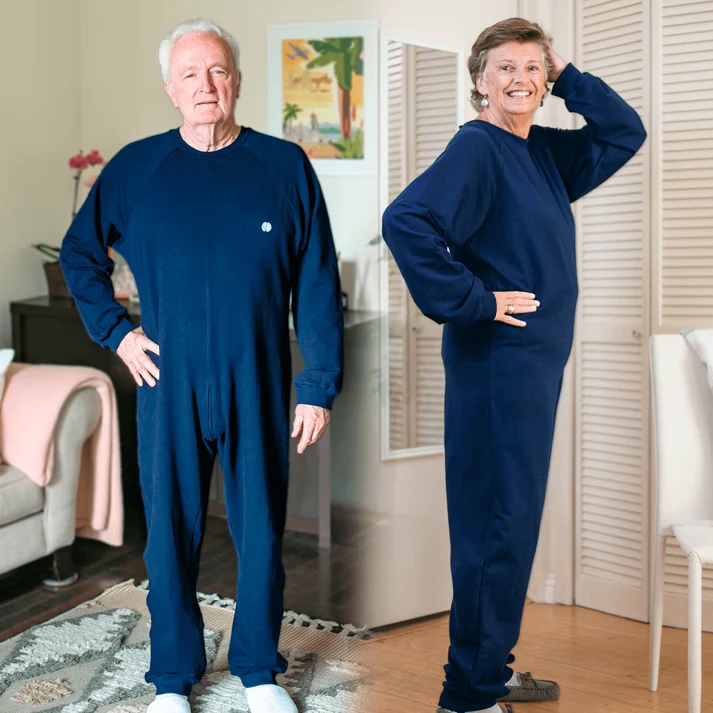
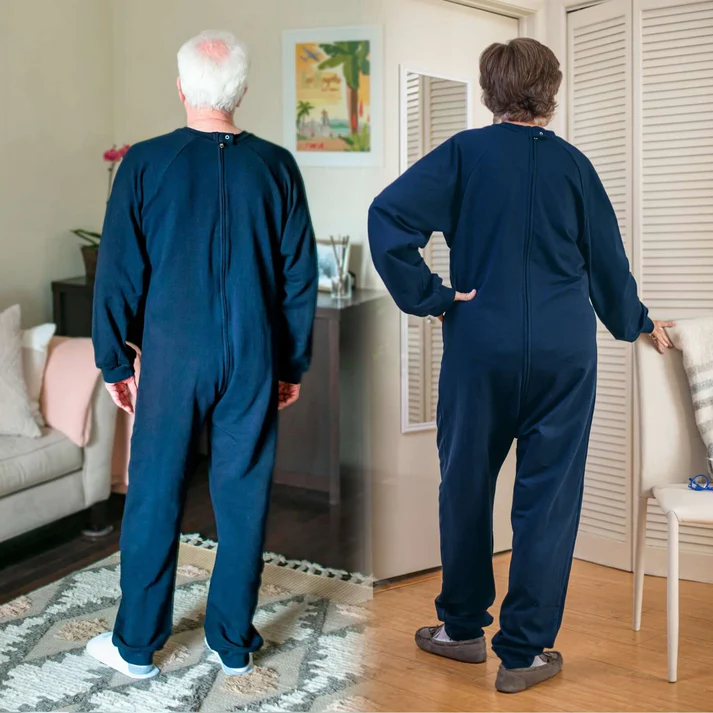
The brand’s initial product, the adaptable Anti-Strip Back-Zip Jumpsuit, arose out of that experience. We chose this piece of clothing to start with since it dealt with one of the hardest changes: the start of incontinence and the need to take off clothes.
Taking care of a loved one at home means finding a way to keep them comfortable while simultaneously making the caregiver’s job easier. The jumpsuit was a game-changer.
Made from high-quality cotton, it is comfortable, breathable, and long-lasting while still looking like regular clothes. The site says that it is “made with 95% cotton and 5% spandex for flexibility (no polyester).”
Families found that it made getting dressed less stressful, kept their dignity, and quietly remedied a problem that was always causing stress.
Some of the most important features are
A separate back zipper makes it easy to put on and wear securely.
Elastic holes provide a comfortable fit, good for people with sensitive skin or swelling.
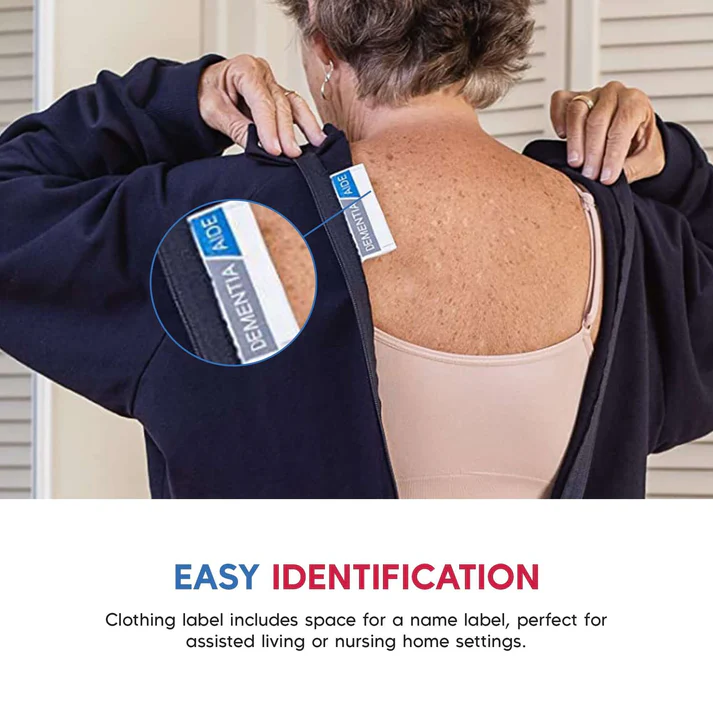
Label space makes it easy to find things in care environments.
The fabric is soft and breathable, so you may wear it all day.
There are two color options: navy blue and burgundy. The sizes are unisex: X-Small, Small, Medium, and Large.
A size tip: “This style is too big.” We suggest going down a size for the best fit.
What started as a way to help one family has turned into a must-have resource for many others who are going through the same problems. The goal is clear: give the person with dementia back their dignity, help the caregiver along the way, and transform the way people talk about adaptive care.
Changing the Story
People have talked about dementia in private for too long. It’s normal for both the individual who has the disease and their family to feel ashamed, embarrassed, or alone. Dementia Aide is changing that by getting people to talk about it, teaching families, and coming up with solutions that give individuals back their dignity. Simultaneously, it pledges to ensure the inclusion of individuals with limited or no resources.
Its goal is to make adaptable products more available in communities that don’t have them and in underdeveloped countries. This promise is based on a bigger idea: that poverty or where you live should never affect your dignity or the care you get. The brand is defining a new standard in wellness by combining advocacy with innovation. This new standard puts people first, just like health.
Why Adaptive Clothing is Important
When someone has dementia, even the smallest things might seem very big. Things that seem normal, like getting dressed, changing clothes, and keeping clean, can become quite hard. Clothes that are itchy, zippers that dig in, designs that make people want to mess with them, and clothes that make people look too institutional or childish all take away from their dignity.
Adaptive clothing can help you feel less stressed, stay comfortable, and be independent when feasible. For caregivers, it means fewer fights, less stress, and more time to connect with each other instead of fighting.
When a person with dementia’s dignity is protected, they may feel less agitated, less restless, and more at ease. The caregiver may also feel more respected, supported, and less alone.
Families’ Real Voices
It’s important to hear from caregivers themselves. Customers talk about their real-life experiences on the brand’s website:
“This onesie is the warmest, softest, and most comfortable.” My dad used to take off his clothes inappropriately, dig in his diaper, or stand naked at the door. “He has his dignity back and feels like a man again.” — Melissa C.
“Good products, great customer service. I’ll buy from them again!” … He has had so many accidents in the restroom because he keeps messing with his diapers. “Now that he can’t mess with it anymore, he can stay dry at night.” — Frank
“Size and Returns: …When I emailed to trade for XS, they did it without asking any questions.” “Great customer service,” said Donny Lo.
These reviews show more than just satisfaction; they show relief, regained dignity, less stress, and a meaningful collaboration between the caregiver and the brand.
There are also useful conversations on caregiver forums on Reddit, such as:
“The suit itself seems to be well-made and long-lasting, except for the zipper.”
Reddit
This suggests that caregivers are actively looking at how well a product works in the real world, how long it lasts, and how easy it is to use, and they are expressing their thoughts.
The Bigger Picture of Design and Comfort
When it comes to caring for people with dementia, the design of their clothes is quite important. A back-zip design, a hidden zipper, soft fabric, quick dressing, and a space for an identity badge are all important aspects since they affect how people interact with each other every day.
Think of how upsetting, dangerous, and embarrassing it may be when someone with dementia starts to take off their clothes or mess with incontinence garments. A garment made to stop such behavior can change the way things are. It lets the person wearing it keep some normalcy and dignity. It lets the caregiver be less reactive and more caring.
The aesthetics are important too. Clothes that appear like regular clothes, not hospital clothes, help the person feel like themself. The fabric is 95% cotton and 5% spandex, which makes it breathable and flexible. It doesn’t have polyester, which might irritate sensitive skin.
Another important thing is size. The maker says that this product’s sizing runs big and that you should size down. That indicates that you care about how it fits, how comfortable it is, and how it works in the actual world.
Helpful Advice for Caregivers
Here are some ideas to get the most out of adapted apparel like this jumpsuit:
Take your time measuring: The product is big, so look at the sizing chart and think about going down a size for a better fit.
How easy it is to dress: Find out how the rear zipper works. Some caretakers say it’s simpler to dress someone who isn’t very mobile with two people.
For care homes or assisted living settings: Choose colors, label areas, and select materials based on the surroundings and the needs of the people who live there.
Laundry care: Washing and drying your clothes regularly (in cold water and on low heat) keeps the fabric supple and strong.
Take your time: When you give someone a new piece of clothing, they may need to get used to it first. Let them wear it for short amounts of time at first and pair it with their favorite activities.
Keep an eye on sensitivity: Check for irritation around zippers, seams, and elasticated openings if the person wearing the clothes has sensitive skin.
Rotate clothes: If you have more than one jumpsuit, you can wash one while the others are drying.
Help the caregiver: Read the brand’s blogs and articles to understand how to deal with behavior problems, manage incontinence, and give emotional support.
Stay involved: Don’t think of adaptive clothes as a permanent fix. Instead, provide the person with dementia meaningful activities, conversations, and emotional support along with the clothing.
Answering Frequently Asked Questions
1. What sets this adaptive back-zip jumpsuit apart from regular senior clothes?
Because it was made just for those who have memory loss, cognitive disability, or habits that make them take off their clothes. Standard senior attire may not help with problems like messing with incontinence supplies, taking off clothes without warning, or having trouble getting dressed. This jumpsuit has certain features (such as a hidden back zipper, elastic openings, and cotton fabric) that lower risk, improve dignity, and make caring for someone easier.
2. How do families and caregivers use this garment to help people with Alzheimer’s or dementia?
They utilize it to make getting dressed easier, cut down on times when the person takes off their clothes inappropriately, help the user feel dignified and comfortable, keep the caregiver from having to clean up messes caused by diaper tampering, and give the caregiver more peace of mind. It often becomes part of a larger plan for respectful care instead of just a piece of clothes.
3. Does the brand offer help with size, resources, and customer service for adaptive dementia clothing?
Yes. The brand’s website has size charts, fit suggestions (size down), customer reviews, FAQs about the product, and a promise to help families that are having trouble making ends meet. “If you or someone you care about needs our products but can’t afford them, please don’t hesitate to contact us.”
The Emotional Side: Connection, Identity, and Dignity
The emotional side of caring for someone with dementia goes beyond the practicalities of clothes. When someone loses their cognitive abilities, their memory fades, their conduct changes, and their responsibilities alter. It can feel like the person they used to be is disappearing. But the individual is still there, still deserves respect, and still deserves to be viewed as more than just a diagnosis.
Clothing like this serves a symbolic purpose. It states, “You are still a person.” We respect your comfort. “We honor your dignity.” This helps caregivers deal with their loved one’s shifting needs better. It helps bring back some of the normalcy that dementia takes away.
Small things like a kind touch, a clear schedule, a garment that fits, and a grin that still shines through are commonly used to measure caregiving. This brand knows that. It knows that being healthy isn’t only about being physically well; it’s also about being emotionally healthy, having a strong sense of self, and respecting yourself.
Hope, Community, and Connection
The brand has built a community, not just a product. It improves caring networks by sharing stories, writing a blog, and sending the simple message “you are not alone.” It brings together those who feel alone and gives them useful tools.
Caregivers can talk about what works, what doesn’t, what problems they have, and what successes they have. They can remark, “I found something that helps.” I found someone who gets it. I found a moment of calm.
Hope in dementia care may not always manifest as a cure; it may instead present as comfort, connection, dignity, and tranquility. It might show up as fewer times when someone has to get undressed, fewer laundry problems, a quieter nighttime routine, and a caregiver who sleeps a bit better.
Facing the Problems and Picking Solutions
Taking care of someone with dementia is hard. You can never predict what will happen. Undressing, incontinence, agitation, wandering at night, emotional loss, and caregiver exhaustion are all things that could happen. But there are ways to adapt. Thoughtful products, helpful communities, and kind design may all make a big impact.
This jumpsuit is just one part of the puzzle, not the whole thing. It doesn’t take the place of meaningful connections, professional care, or medical supervision. But it can help with one of the problems: getting dressed and undressed, fighting for dignity vs. usefulness, and safety vs. independence.
For the person with dementia, this means a piece of clothing that fits, is comfortable, and doesn’t look like a “care-home uniform.” For the caregiver, this means fewer arguments, fewer urgent messes, more time for calm discussion, and more peace of mind.
A Wider View of Adaptive Wellness
For caregivers and persons with dementia, wellness is more than just drugs, therapies, or institutions. It means clothes, and comfort, that respect who you are. It means resources that value being a caretaker. It implies a design that says, “We see you, we respect you, and what you’ve been through matters.”
The brand’s vision is clear: no one should have to choose between dignity and compassionate care based on where they live or how much money they have. Families everywhere should have access to resources, support, and flexibility. Caregivers everywhere should be able to take a break, get help, and be respected.

Why This Is Important
Why does this matter? Because dignity is not a luxury; it’s a basic need. Because caregivers are the unsung wellness workers in our society. Because when someone with dementia undresses abruptly, it’s not mischief; it’s a sign of discomfort, unmet need, or identity disruption.
It matters when clothing becomes a tool for caring, a link between someone’s former self and their present self. It converts clothing into compassion, function into respect, and routine into freedom.
When a company knows this, listens, designs accordingly, and helps caregivers, wellness becomes complete again.
If you’re a caregiver reading this, know that you’re not alone. There are tools available to help with behaviors like undressing, incontinence, and maintaining dignity. If you’re looking into adaptive clothing, ask about the fabric, where the zipper is, how comfortable it is, how big it is, and how it fits your identity.
And if you think your loved one is still important, still alive after the diagnosis, still wants comfort, and still deserves respect, then this kind of clothes-first care is more than just clothes. It’s a way of saying that you care.
To sum up, this brand’s journey from a family’s problem to a solution used by many shows what adaptive wellness can be: personal, relatable, and human. Their mission is to focus on dignity and empowerment, not just marketing. When you combine that mission with thoughtful design, evidence from users, and caregiver-centered support, wellness becomes available to everyone.
For caregivers, loved ones, and families dealing with memory loss, this is one more tool in the toolbox. It’s another way to say, “You matter. We see you. We support you. We design with you in mind.”
May that bring comfort, connection, and dignity to everyone who is doing this hard but extremely essential task.