


The red dust of Pickrell, Nebraska, does not yield to the uninitiated. It demands a particular type of penance, a hundred years of sun, scaled necks, and calloused palms. Since 1907, Jurgens Farms has operated as a quiet sentinel in this landscape, rotating cattle and corn through the rhythmic cycles of the Great Plains; however, for decades, the broader market failed the tradition. The American snack aisle became a graveyard of mechanically separated grey matter, shelf-stable husks sitting around pretending to be protein, a chemical preservative that dulled the palate. The issue was simple: the soul of the brand was being lost in the factory’s machinery.
True quality felt like an ancient relic. Imagine a world where the brute force of a professional offensive lineman meets the precision of a heritage smokehouse. The vision was never about making another gas station snack; it was about taking back the dignity of the Nebraska steer. It was about moving from the frustration of diluted nutrition to the peak of artisanal fuel. This is the story of Beef Jurgy LLC, the link between 100 years of agricultural hard work and the modern demand for pure excellence.

The Century-Long Audition
Pickrell is not a place for the weak. When Cam Jurgens speaks about the Beef Jurgy legacy, he is talking about a bloodline. The soil here sits atop the Ogalla Aquifer, a subterranean lifeblood that feeds the hay and soybeans that, in turn, build the muscle of the Jurgens herd. For well over 110 years, this cycle remained a family secret.
The contemporary customer lives in a nutritional deficit. They settle for jerky that tears exactly like cardboard (and tastes like it, too). They accept smoke flavor instead of actual hickory. This is the before state, a cycle of low-energy snacking that spikes insulin without feeding the mitochondria. The struggle is not just about taste; it is also about a lack of clarity. People want the farm, but they are given a laboratory.
The Distance Between the Farm and the Mouth
Somewhere along the way, food became anonymous. There was a time when you could trace what you were eating back to a place, a person, and a season. You knew what the land smelled like in the morning, how the air shifted before a storm, how long something took to grow, to graze, to become worthy of a table. But convenience has a way of stretching that distance. It turns meals into transactions, ingredients into formulations, and protein into something engineered rather than earned.
The modern consumer doesn’t just suffer from poor options; they suffer from disconnection. The label says “beef,” but it doesn’t say where it stood, what it ate, or who watched over it. It doesn’t tell you about the winters it endured or the hands that made sure it did. That distance is where trust erodes.
What Jurgens Farms, and by extension, Beef Jurgy LLC, represents is not just a return to quality, but a collapse of that distance. It is the shortening of the line between land and life. When you open a bag, you are stepping into a lineage that refused to be diluted. And maybe that is what people are really hungry for. Not just protein, but proof.
The First Cut
Before anything is smoked, seasoned, or sealed into a bag, there is a moment of decision. It happens at the cutting table. A slab of beef is laid out, and for a second, everything slows down. You can tell a lot from that first look: the grain of the muscle, the balance of fat, the integrity of the cut. This is not a process that tolerates indifference. A wrong cut cannot be corrected later with seasoning or smoke. It will carry through to the final bite. The knife follows the natural lines of the meat. Each strip is a negotiation between precision and respect. Too thin, and it loses its character. Too thick, and it becomes tough. There is a rhythm to it, something learned over time, something that cannot be achieved through automation.
This is where most modern snacks fall apart. They remove the human element. They aim for consistency at all costs, even if that cost is texture or identity. At Beef Jurgy, the first cut is where the product earns its right to exist. Everything that follows is simply a continuation of that standard.
The Design Behind the Sting
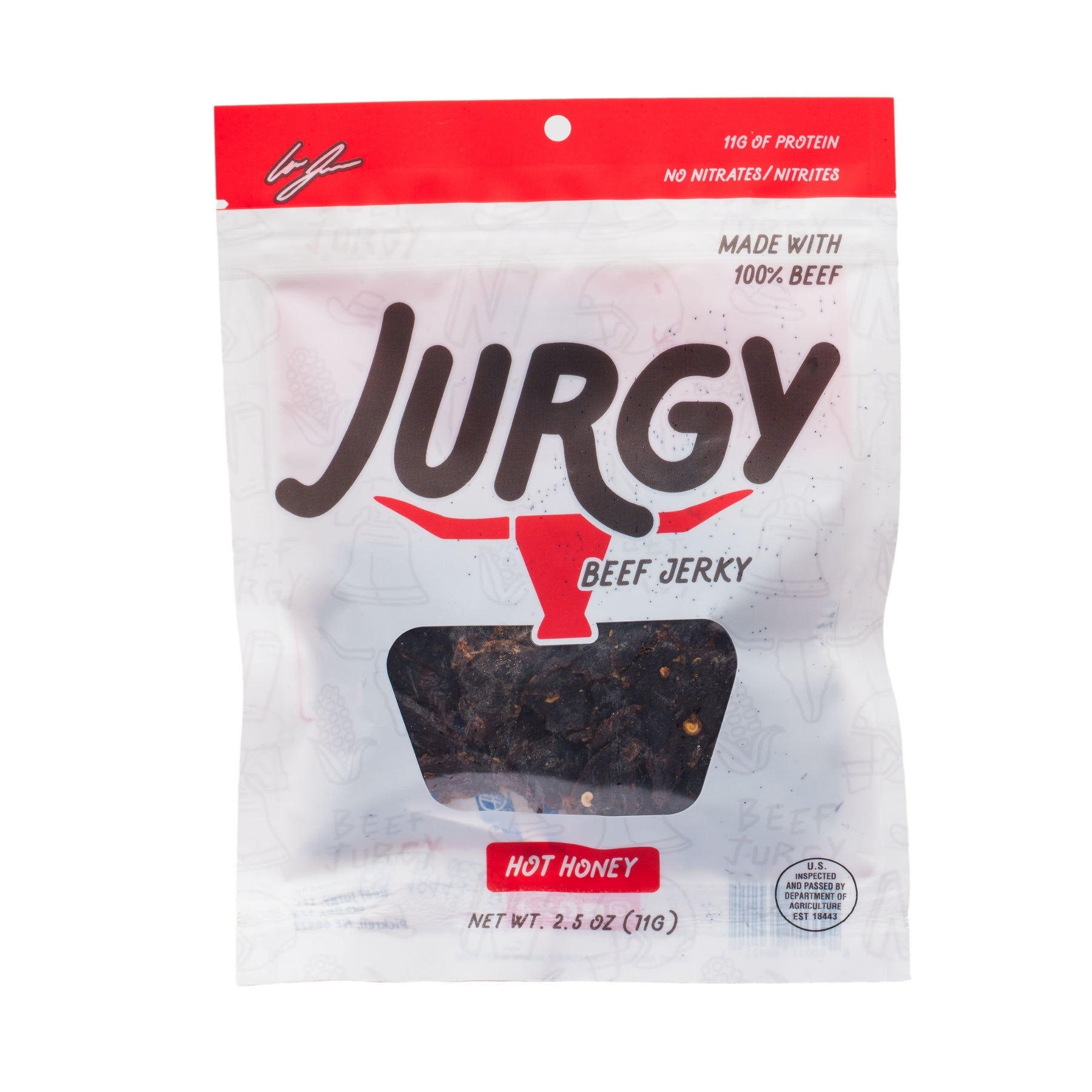
Many spicy snacks rely heavily on capsaicin’s burn; it essentially just burns. Beef Jurgy handled this differently. They viewed the chemical synergy between the sweetness of honey and the slow, rolling heat of the chili. The outcome was a work of art: the Hot Honey Beef Jurgy Jerky! The honey provides an instant glucose hit to the brain (which is essential for cognitive clarity), whilst the protein ensures a slow release of amino acids. The heat acts as a metabolic force. Small batches, hand-trimmed, absolutely no shortcuts, this is proof that the brand refuses to scale at the expense of its heart.
The Sampler: Form and Function
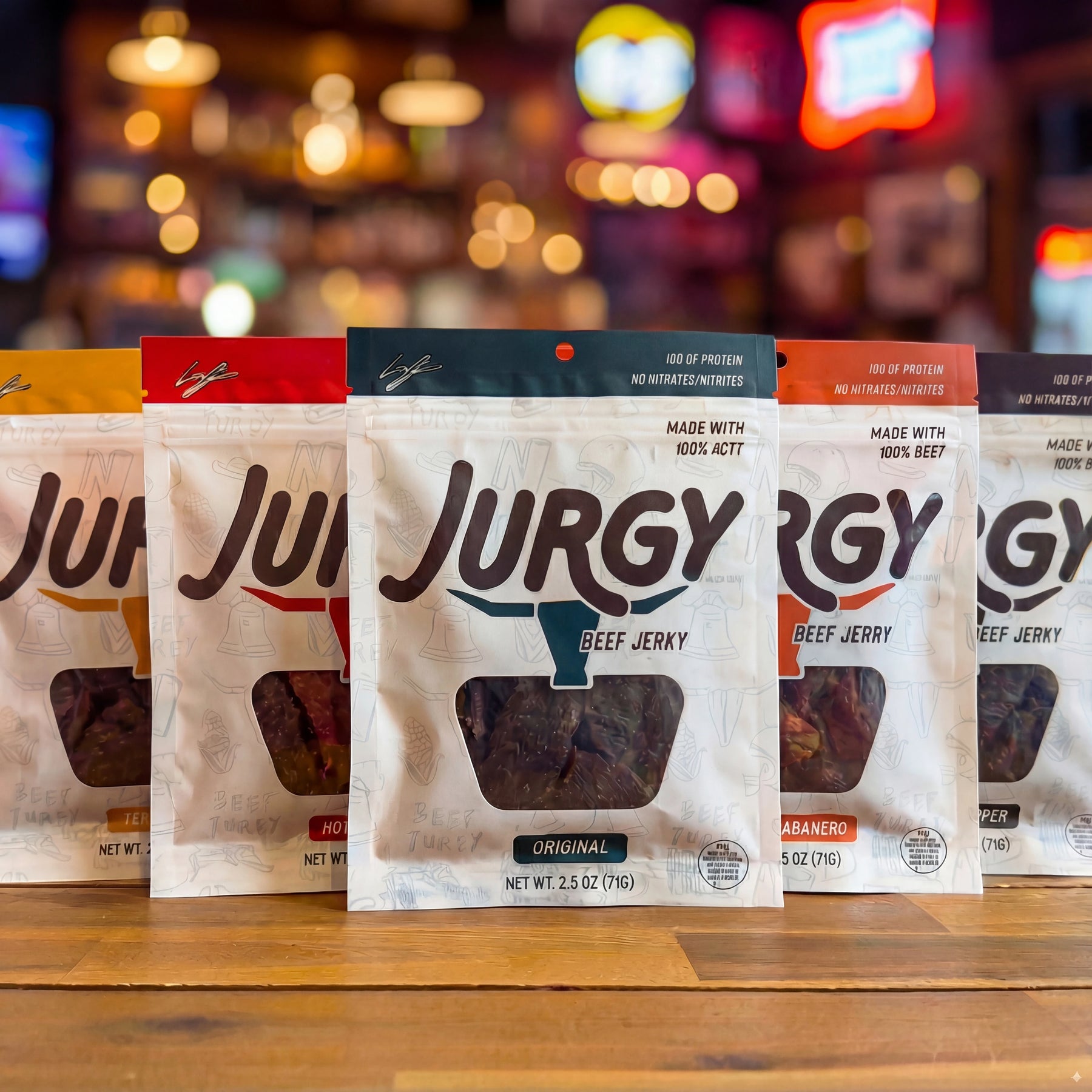
To understand the transformation, one must experience the Round Robin Jurgy Sampler. It operates as a strategic map of everything the brand is capable of.
Texture: It maintains the snap of high-quality beef.
Marbling: Even in dried form, the richness of the fat (which is what carries the flavor) is evident.
Finish: No chemical aftertaste, no oily residue. Just pure and clean.
This sampler is the introduction for the skeptic. It represents the change from the “before” of mass-produced average to the “after” of ranch-to-pouch excellence.
The Undercover Advantage
The secret is in the Nebraska grass. While many brands outsource their sourcing to unknown closed-loop companies, the Jurgens lineage ensures a closed-loop system of accountability. Humility is its anchor. You do not survive 100 years in the Midwest by overpromising and underdelivering; you survive by outworking the weather. Cam Jurgens brought this stoic approach to the boardroom. The jerky is a direct reflection of a man and the land, resilient, dense, and intricately crafted.

The Weight of Weather
There is no such thing as control on a farm, only response. The sky decides more than any business plan ever could. A season can turn on a week of heat, a night of frost, a storm that arrives too early or not at all. The land keeps its own time, and those who work it learn quickly that resilience is not a mindset; it is a requirement. On Jurgens Farms, this relationship with uncertainty is not romanticized; it is what they endure day in and day out. It is reflected in the way decisions are made, in the patience required to let things develop properly, and in the absolute refusal to cut corners when conditions get difficult.
You cannot rush an animal that has been raised properly, you cannot fake the density of muscle built over time, or the depth of flavor that comes from a life lived on open land. When you taste Beef Jurgy, you are tasting something that has already been tested by heat, by cold, by time itself. That is where its confidence comes from.
The Moment It Clicks
It does not happen when you open the bag. It happens a few seconds later. You take a bite and expect the usual: something overly tough or artificially soft, something aggressively flavored but ultimately hollow. But this time you are pleasantly surprised. This time, the texture gives just enough before resisting. The flavor doesn’t spike and disappear; it builds, it lingers, and it evolves.
That is when it clicks. This is what it was supposed to taste like. You realize how far the standard has fallen and how simple it actually is to restore it. You finish the piece, and for the first time in a long time, that feels like enough.