

There’s a moment, usually late at night, usually when the world goes quiet, when depression reveals its true nature.
It’s not dramatic. It doesn’t scream.
It settles.
It settles into the shoulders, into the breath, into the way joy feels distant even when life looks objectively “fine.” Depression doesn’t always announce itself as despair. Often, it’s a dulling. A flattening. A persistent sense that something essential has gone missing.
Globally, more than 300 million people live inside this invisible fog. And for a staggering number of them, conventional solutions, therapy, antidepressants, and lifestyle upgrades, only partially help. Or stop helping altogether. This is what clinicians call treatment-resistant depression, but what sufferers experience as something far more personal: the fear that nothing will ever really shift.
In the United States, around 22% of adults suffer from depression.
Which is why a once-dismissed organism is suddenly at the center of one of the most intriguing mental health research breakthroughs of our time.
Not a pharmaceutical. Not a device.
Just a humble, but magical mushroom.

The Humble Mushroom Makes a Comeback
Magic mushrooms have lived many lives: sacred medicine, counterculture symbol, taboo substance, even a cultural punchline.
Now, they’re becoming something else entirely.
At major research institutions around the world, scientists are studying psilocybin, the active compound in “magic mushrooms”, not as an escape, but as a therapeutic catalyst. The results are quietly radical.
Unlike conventional antidepressants, which are typically taken daily and work by gradually modulating neurotransmitters, psilocybin-assisted therapy appears to function more like a psychological “reset,” disrupting entrenched and toxic thought patterns. In clinical trials, participants who received a single high macrodose, 20 mg of psilocin (roughly equivalent to 2.5 g of dried mushrooms), reported sustained improvements in mood, mental health, and overall life satisfaction for months afterward (Griffiths et al., 2016).
Similarly, patients with treatment-resistant depression in a seminal study by Carhart-Harris et al. (2016) experienced substantial and lasting symptom relief following psilocybin-assisted therapy.
Despite these promising findings, access remains limited. It’s estimated that only a small fraction of people seeking alternative therapies are able to access them. In regulated states like Oregon, legal psilocybin sessions can cost upwards of $3,000 per experience and require structured integration support afterward. Faced with high costs and limited availability, many individuals have turned instead to the humble, organic mushroom, exploring wellness through gentle microdosing, often as low as 100-200 mg each.
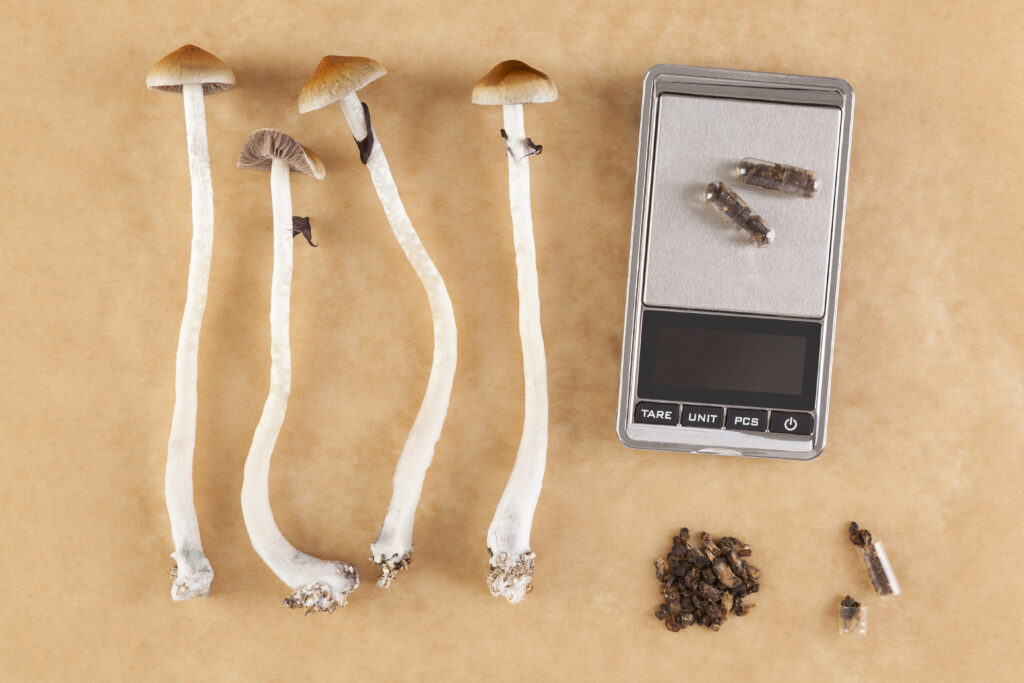
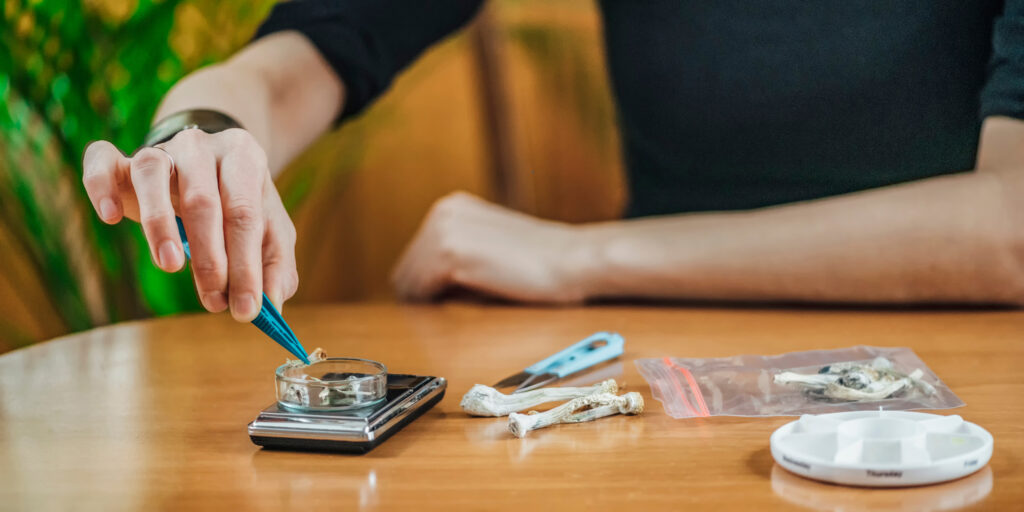
Microdosing is usually 1/20th of a macrodose, and tends to produce subtle, pleasant effects that are often better tolerated by people living with PTSD, trauma, or depression. It’s usually taken in a good set setting like your home, in the morning, on an empty stomach with something acidic like lemon juice of apple cider vinegar. It’s often consumed in a tea, whole or in edibles. The Fadiman Protocol recommends microdosing 1 day on and 3 days off with periods of reflection, meditation and integration of each experience. For example, every Tuesday and Saturday morning.
This wasn’t numbing. This was opening.
Depression Isn’t Just Chemical, It’s Patterned
Here’s where the story gets interesting.
The prevailing narrative around depression has long been chemical imbalance. But emerging neuroscience suggests something more nuanced: depression is also a condition of rigidity.
Rigid thoughts. Rigid self-stories. Rigid neural pathways that loop endlessly around fear, shame, and self-criticism.
Brain imaging studies show that people with depression often have an overactive default mode network, the brain system associated with rumination and ego-based thinking. It’s the voice that narrates your failures. Replays the past. Predicts a bleak future.
Psilocybin appears to temporarily quiet this network, while increasing communication between brain regions that don’t normally interact. In simple terms, the brain becomes more flexible.
More curious. Less trapped in itself.
Neuroplasticity increases. Perspective widens. Emotional processing deepens.
For many participants, this feels like seeing their life from above for the first time, less entangled, more compassionate, more possible.
What the Studies Are Really Pointing Toward
Across multiple conditions, psilocybin-assisted therapy has shown promise, not as a cure-all, but as a powerful adjunct to psychological healing.
Research has explored its effects on:
- Treatment-resistant depression (Carhart-Harris et al., 2016; Griffiths et al., 2016)
- Anxiety and depression related to terminal illness, with participants reporting reduced fear of death and increased meaning (Griffiths et al., 2016; Ross et al., 2016)
- Obsessive-compulsive disorder, with early studies showing symptom reduction (Moreno et al., 2006)
- Substance use disorders, including tobacco and alcohol dependence (Johnson et al., 2014; Bogenschutz et al., 2015)
- Even among healthy volunteers, psilocybin has been associated with lasting increases in openness, mindfulness, and emotional well-being (Madsen et al., 2020).
The common thread?
Insight. Emotional processing. Meaning.
These are not side effects; they are the mechanism.

From the Clinic to the Culture: The Rise of Microdosing
In wellness circles, a parallel trend has been developing quietly: microdosing mushrooms. This is in contrast to clinical trials, which emphasize supervised, high-dose experiences in conjunction with psychotherapy.
Rather than overpowering, microdosing psilocybin gradually supports mood, creativity, concentration, and emotional resilience via the administration of extremely tiny, sub-threshold dosages.
No visions. No ego dissolution. Just subtle shifts.
For many, microdosing feels less like a treatment and more like a practice, akin to meditation, journaling, or adaptogenic herbs. It’s about relationship, not escape.
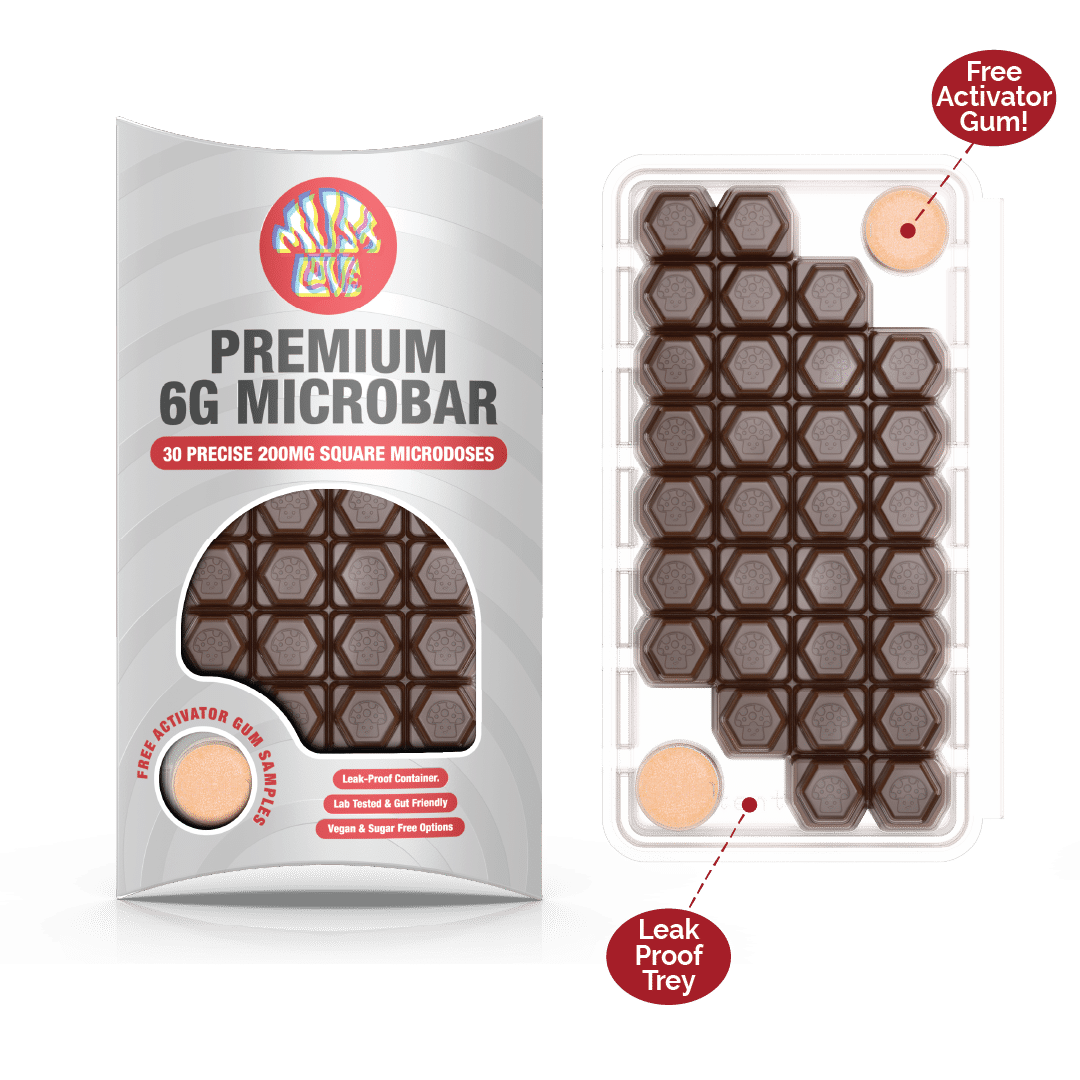
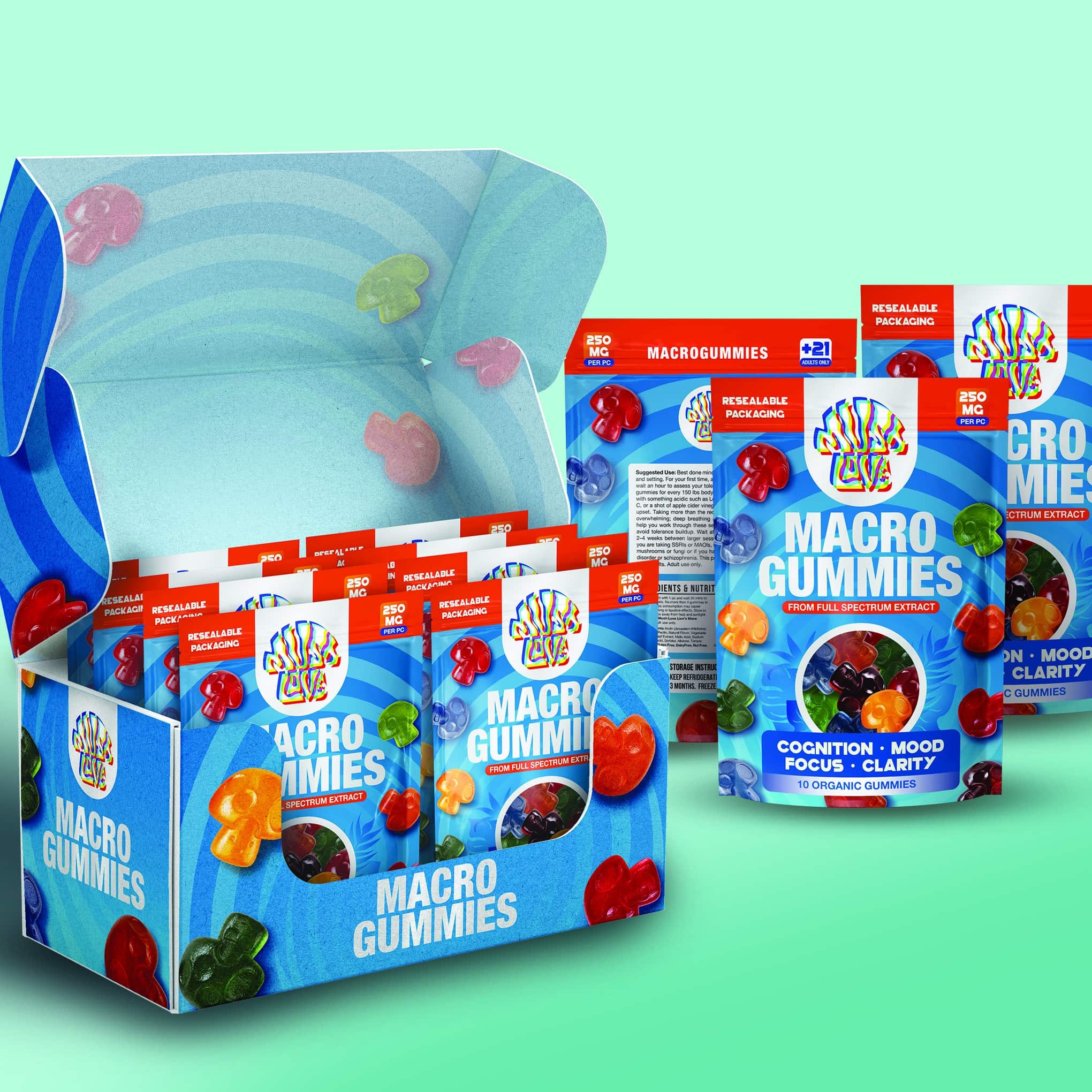
The result is a line of carefully crafted microdosing items that put an emphasis on purpose and consistency, such as magic mushroom gummies, mushroom chocolate bars, and tailored microdosing kits.
Within this new “industry” of microdosing, products named things like “Macrogummies” and “Microbars” can be found, catering to individuals who are looking for a more organized, discreet and supported routine to microdose mushrooms.
This isn’t about chasing a quick buzz to escape life.
It’s about supporting a mind that can be present to it.
The Container Matters More Than the Compound
One of the most important takeaways from the research is this: the mushroom alone is not the therapy.
In clinical settings, psilocybin experiences are carefully framed with preparation sessions, trusted guides, and integration therapy. Participants aren’t left alone with what surfaces; they’re supported in translating insight into action.
This is where many misunderstandings arise. Magic mushroom therapy is not recreational use with a wellness label. It is a structured holistic intervention, and its safety depends on screening, context, and emotional support.
The best discussions, even in the practice of microdosing, center on purpose, introspection, and pace. Respect the process. This is true whether one is looking for new ways to treat depression or is just interested in learning more about existing options.
Safety, Stigma, and the Legal Landscape
In controlled settings, psilocybin has demonstrated a strong safety profile:
- No evidence of physical addiction
- Low toxicity
- Limited long-term side effects when properly screened
That said, psilocybin is not appropriate for everyone, particularly individuals with certain psychiatric conditions. Proper screening and medical oversight are essential.
Culturally, the conversation is shifting. Laws are evolving. Stigma is softening. Several regions are exploring regulated therapeutic frameworks that prioritize safety over criminalization, not because mushrooms are trendy, but because the mental health crisis demands new thinking.
As access slowly changes, many people choose to educate themselves about microdosing before beginning any personal practice. Free educational tools and AI-based resources, such as MushGPT.com, are often used to help individuals understand dosage, set and setting, and responsible preparation. Preparation remains key.

What This Moment Is Really About
Magic mushrooms are not a miracle cure. They won’t replace therapy, community, or the daily practices that sustain mental health.
But they represent something quietly revolutionary:
- A treatment that can work when others don’t
- A model that treats depression as interruptible, not permanent
- An approach that centers meaning, emotional truth, and psychological flexibility
For those who have lived inside the same mental loop for years, even decades, that possibility is not abstract.
It’s hope, and because of so many new players in the mushroom space, it’s even affordable.
And maybe that’s the real reason mushrooms have re-entered the conversation, not as rebels, but as teachers. Not as escapism, but as invitation.
An invitation to loosen the grip.
To soften the story.
To imagine that healing doesn’t always come in daily doses, but sometimes, in a single moment of profound remembering.
This article is intended for educational and informational purposes only. It does not offer medical advice or recommend the use of microdosing mushrooms outside of legally permitted and professionally supported settings. Individuals currently taking SSRIs or with a personal or family history of psychiatric conditions such as bipolar disorder or schizophrenia should not engage with these compounds without consulting a qualified medical professional. Always prioritize safety, legality, and support when exploring any intentional practice.