


Why January Fog Isn’t a Personal Failure, and How to Think Clearly Again
January has a very specific texture.
It’s not burnout. It’s not sadness. It’s not even exhaustion in the dramatic, Netflix-documentary sense.
It’s more like… latency.
You sit at your desk, coffee in hand, inbox open, brain buffering. Thoughts arrive late. Motivation feels muffled. Focus slips through your fingers like a silk scarf you can’t quite catch. You reread the same paragraph three times. You open the fridge without knowing why. You feel vaguely annoyed at yourself for not being sharper, brighter, more on it.
And the cultural verdict is swift:
- You’re lazy.
- You lost momentum.
- You need discipline, grit, and a vision board.
But what if January brain fog isn’t a personality flaw at all?
What if it’s biochemical? Cellular? Fixable?
Welcome to the next chapter in winter wellness, where we stop blaming our willpower and start supporting the actual systems that allow us to think, plan, remember, and create. This is The Winter Brain Reboot, and it has very little to do with trying harder.

The January Fog Myth: Why We Moralize Mental Slowness
We’re remarkably cruel to ourselves about cognition. When our skin looks dull, we say it’s dehydrated. When immunity dips, we say the system needs support.
But when our thinking slows? We assume something is wrong with us.
January is the perfect storm for this misunderstanding.
We spend more time indoors, under artificial light, in front of screens that quietly increase oxidative stress in neural tissue. We move less, drink less water, consume heavier foods, lean harder on caffeine, and live in a low-grade state of physiological compression. None of this shows up dramatically, no fever, no clear deficiency, just a creeping sense that the brain isn’t firing on all cylinders.
And because it’s subtle, we internalize it.
Here’s the reframe that changes everything:
Winter brain fog is not a character issue. It’s a cellular energy and signaling issue. Your neurons are under-fueled. Your cells are over-stressed. Your brain is doing the best it can with compromised resources.
And once you understand that, the solution stops being motivational quotes and starts being targeted nourishment.
Your Brain Is an Electrical Organ (And Winter Disrupts the Current)
Let’s get one thing straight: your brain is not powered by coffee and good intentions.
It runs on electricity, tiny, precise electrical impulses generated by the movement of minerals across cell membranes. Sodium. Potassium. Magnesium. Chloride. These electrolytes are not “fitness supplements.” They are the conductors of cognition itself.
Every thought you think. Every memory you access. Every decision you make. Everything depends on electrolyte balance.
In summer, we talk about hydration because sweat makes the deficit obvious. In winter, dehydration is quieter and arguably more insidious. Heated indoor air, less thirst signaling, more caffeine, and fewer hydrating foods create a state of low-grade cellular dehydration that doesn’t feel dramatic but absolutely affects mental clarity.
The result?
- Slower nerve signaling.
- Scattered attention.
- That infamous 3 p.m. mental crash that no amount of espresso fixes.
This is where electrolytes step out of the gym bag and onto your desk.
Electrolytes: The Most Overlooked Brain Supplement in Winter
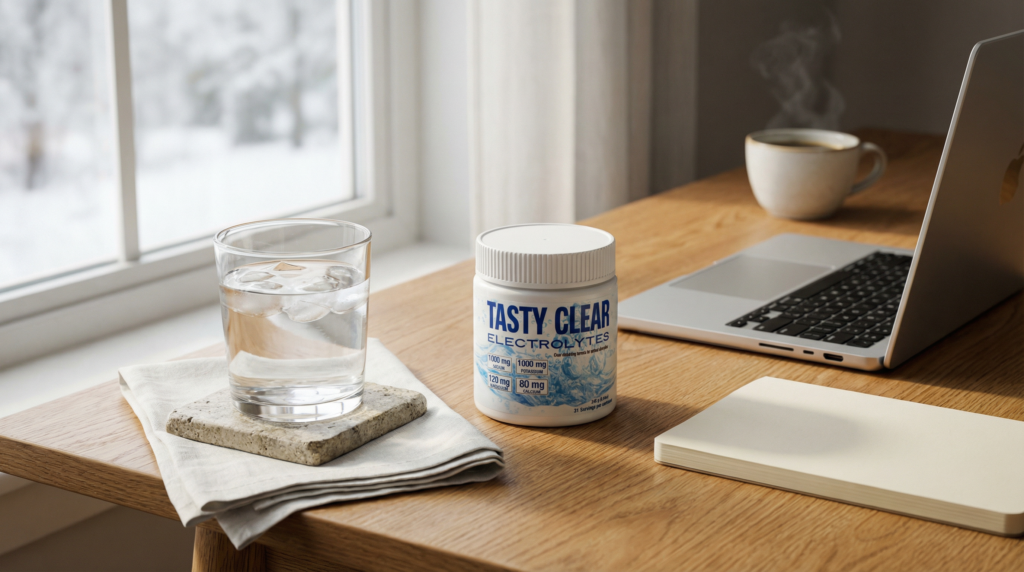
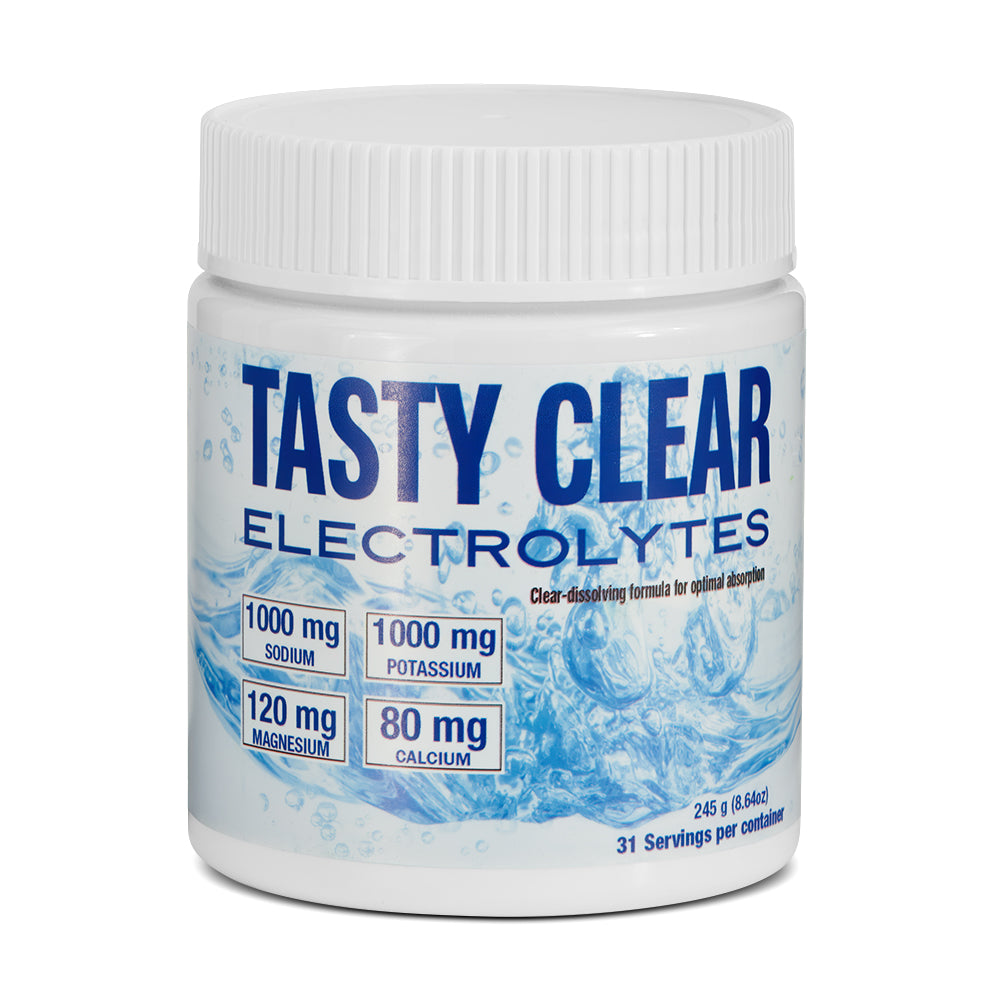
PureBulk’s Electrolytes – Tasty Clear don’t scream “cognition.” There’s no neon label promising hyper-focus or limitless productivity. And that’s exactly the point.
This isn’t stimulation. It’s restoration.
Sodium helps neurons fire efficiently instead of misfiring under stress.
Potassium supports communication between brain cells, influencing focus and emotional steadiness. Magnesium plays a role in hundreds of enzymatic reactions tied to energy production and nervous system regulation.
When these minerals are even slightly off-balance, thinking becomes effortful. Not impossible, just heavier. Like walking through water instead of air.
The genius of Electrolytes – Tasty Clear is how quietly it integrates into real life. It’s not about chugging a sports drink mid-meeting. It’s about desk hydration, a clean, customizable way to feed your brain the minerals it needs to do complex work without drama.
Think of it as clearing static from the signal.
Not louder thoughts. Cleaner ones.

Why Winter Feels Mentally “Noisy”
Another hallmark of January cognition isn’t just fog, it’s noise. Racing thoughts that go nowhere. Mental tabs left open. A sense of internal clutter.
This isn’t psychological weakness. It’s oxidative stress.
Modern winter living increases the burden on your brain’s antioxidant systems. Less daylight. More blue light. More inflammatory inputs from food, stress, and environmental exposure.
Neurons, which are metabolically demanding cells, are particularly vulnerable to this kind of stress, especially at the mitochondrial level, where cellular energy is produced.
This is where the conversation gets interesting.
Because one of the most powerful antioxidants in the human body isn’t a trendy berry or exotic mushroom.
It’s melatonin. And no, we are not talking about it the way you think.
Melatonin, Rewritten: Not a Nighttime Aid, but a Neural Bodyguard
Let’s clear the cultural baggage immediately.
In this conversation, melatonin has nothing to do with sleep.
What we’re talking about is melatonin as a potent, brain-active antioxidant, one that operates where many antioxidants can’t: inside cells, and inside mitochondria.
Melatonin has a unique ability to cross cellular membranes and neutralize free radicals at the source of damage. It doesn’t just mop up oxidative stress; it helps protect DNA, mitochondrial integrity, and neural tissue itself.
This matters enormously in winter, when the brain is quietly absorbing more oxidative load than usual.
At higher dosages, particularly high-strength formulations in the 100 mg+ range, melatonin’s role shifts decisively into the realm of cellular protection, cognitive longevity, and anti-aging support. This is not about short-term effects. It’s about preserving the structures that allow your brain to remain sharp, creative, and resilient over decades.
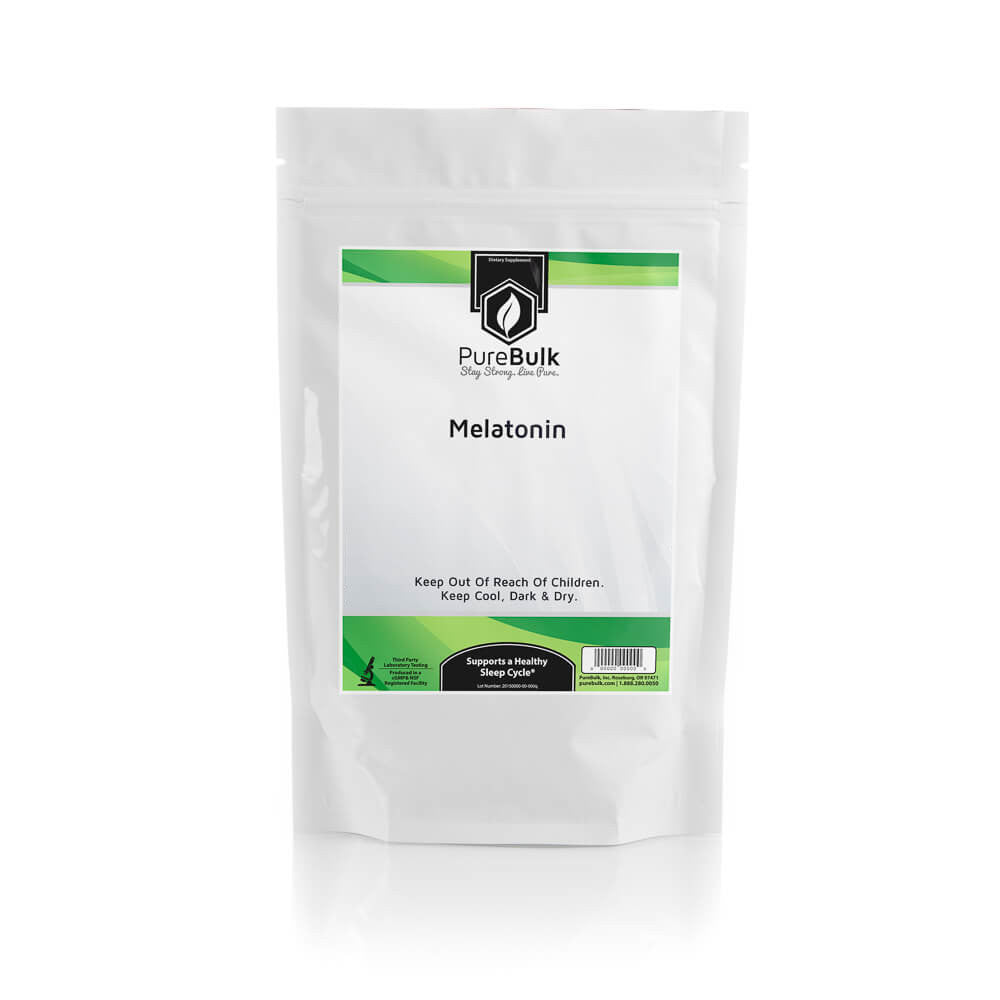
PureBulk’s Melatonin fits seamlessly into this narrative because of its purity and dosage flexibility. It’s not dressed up with claims. It’s presented as what it is: a single-ingredient compound with profound antioxidant capacity.
Think of it as your brain’s night-shift security team, working quietly, continuously, reducing the wear and tear of modern life so your neurons can keep doing high-level work.
Cognitive Longevity Is the New Productivity
We are slowly outgrowing the productivity-at-all-costs era. The new aspiration isn’t endless output, it’s sustained intelligence.
The ability to think clearly at 40, 60, 80. To remember names. To learn new systems. To create, connect, and adapt.
That kind of cognitive longevity doesn’t come from hacks. It comes from protecting the cells that do the thinking.
Electrolytes support the function of neural signaling, how efficiently information moves. Melatonin supports the structure of how well neurons withstand oxidative stress over time. Together, they form a winter brain-care ritual that’s subtle, foundational, and deeply intelligent.
Not flashy. Not forced. Just deeply supportive.
The Ritual: How the Winter Brain Reboot Actually Looks
This isn’t a 12-step morning routine or a biohacker fantasy.
It’s simple.
- Morning: a glass of water with Electrolytes – Tasty Clear before screens take over.
- Midday: consistent hydration to prevent that quiet cognitive dip.
- Ongoing: high-strength melatonin as part of a long-view approach to brain protection, not immediate sensation.
No spikes. No crashes. No overstimulation. Just clarity that feels… normal again. Which is often the biggest sign you’re doing something right.

Why This Matters More Than Ever
We’re asking more of our brains than any generation before us. Constant information intake. Emotional labor. Creative problem-solving. Digital multitasking layered on top of environmental stressors our biology never evolved for.
And then we blame ourselves when cognition falters.
The Winter Brain Reboot is an invitation to stop that cycle.
To recognize that mental clarity is not a moral achievement, it’s a physiological state. One that can be supported with the right inputs, at the right time, for the right reasons.
Electrolytes for signal. Melatonin for protection.
Same products. New story.
This winter isn’t about pushing through the fog. It’s about understanding it and dissolving it at the cellular level.
Because your brain doesn’t need more pressure. It needs better support.
And once it has that? January stops feeling like a struggle and starts feeling like a reset.